
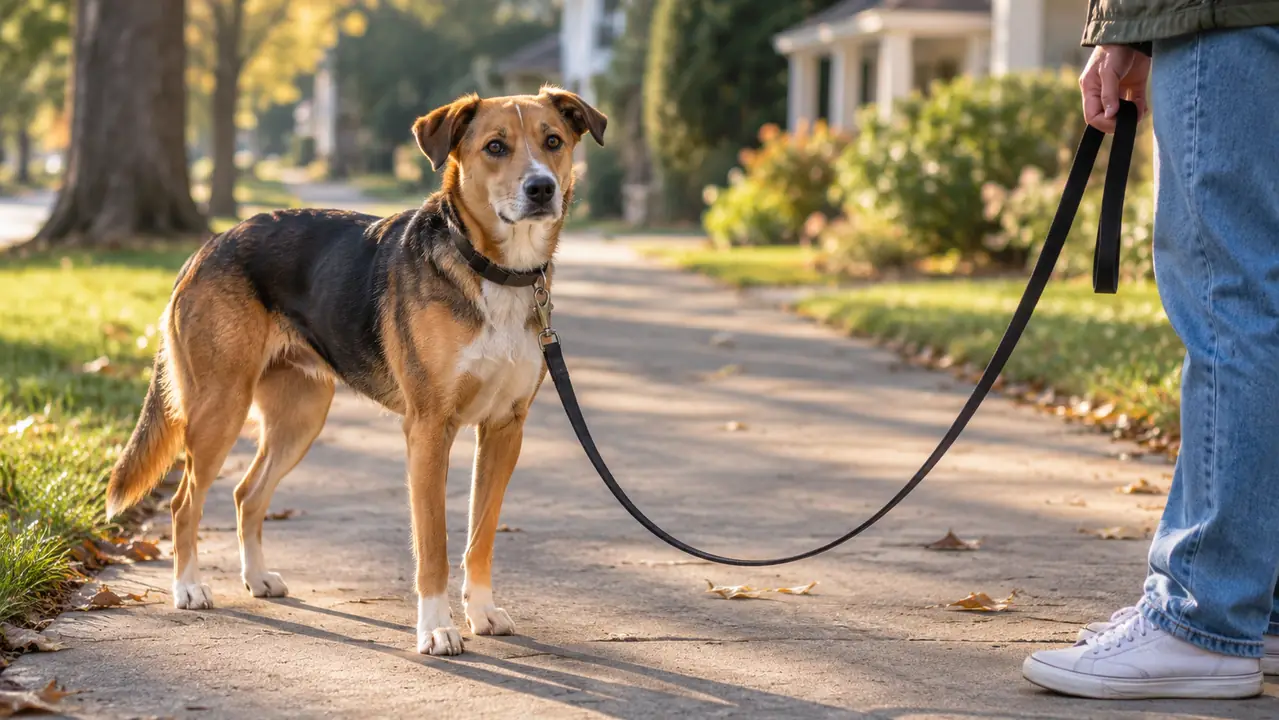
Biscuit came home from the county shelter at two years old, sixty-five pounds of enthusiasm and no idea that a leash is supposed to have slack in it. The first month, every walk was a wrestling match. I am sixty-one now, and after twenty-eight years of walking a mail route here in Sedalia, I have been dragged past more dogs than I can count. I did not care to be dragged by my own. What finally changed things was not a firmer voice or a shorter leash. It was moving the leash attachment from Biscuit's back to his chest with the PetSafe Easy Walk harness. If your dog pulls, here is why that change matters, in ten plain reasons.
A front-clip harness is not magic and it will not fix a dog overnight. It is nylon straps and a buckle. What it does is take the leverage away from your dog and hand it back to you, long enough for training to actually take hold. That is the honest version. Here is the longer one.
Stop being the anchor at the end of the leash
The PetSafe Easy Walk moves the leash attachment to your dog's chest, so a hard pull turns him toward you instead of dragging you down the block. Biscuit was sixty-five pounds of bad manners on a leash. Ten months later I can walk him with one hand and a cup of coffee in the other.
Amazon Check Today's Price on Amazon →It steers from the chest, so your dog turns instead of choking
Dogs pull into pressure. It is how they are built. Put a leash on the back of a harness and a determined dog will lean his whole sixty-five pounds into it and keep going. Move that clip to the front of the chest and the same forward surge swings his shoulders toward you instead of away. There is nothing left to lean against. The first walk with Biscuit, I felt him hit the end of the leash, pivot, and look back at me like I had cheated. I had. That is the entire idea.
The martingale loop applies gradual pressure, never a hard jerk
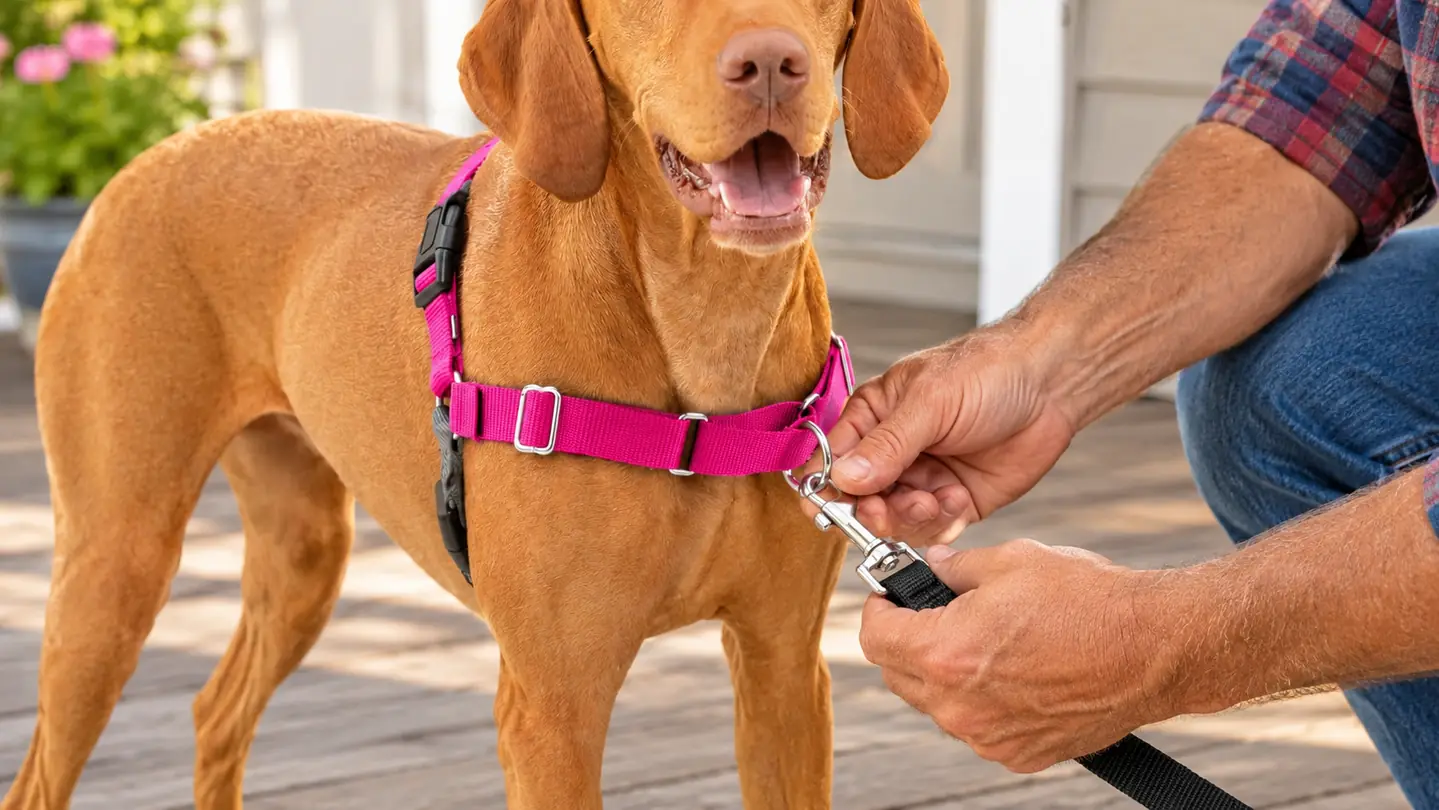
The PetSafe Easy Walk uses a patented martingale loop across the chest. As your dog pushes ahead, the loop closes and applies gradual pressure over the shoulders. The moment he eases off, the pressure goes away. That timing is the part that teaches. Nobody yanks anything. It was designed by a veterinary behaviorist back in 2004, and you can feel that in how gently it loads and releases. Your hands stay quiet, which matters when you are past sixty and your shoulders have already offered plenty of opinions.
One hand is enough on a strong puller
With a back-clip harness, a strong dog can haul me off balance on a flat sidewalk. In a front-clip harness, that same dog I handle with one hand and a loose grip. That is leverage, not muscle. The chest ring sits ahead of the dog's center of gravity, so a pull becomes a turn. I now walk Biscuit past the neighborhood terrier that screams at him through a chain-link fence with one hand on the leash and the other holding my coffee. That is the honest test, and we pass it most mornings.
It stops paying the dog for pulling
Every time a dog drags you to the fire hydrant and gets there anyway, the pulling worked. He practiced it and he got paid. A front clip makes the pull ineffective, so the only thing that still moves him forward is a slack leash. That is when you start rewarding the behavior you actually want. Biscuit worked this out in about a week. He is no genius. The math just changed on him, and dogs are quick with math.
Ten seconds to put on with the quick-snap straps
The shoulder straps have quick-snap buckles, so it goes over the head and clicks at the sides in roughly ten seconds, with a buckle on the belly strap to finish. Ten seconds matters more than people give it credit for. A harness that takes two minutes to wrestle onto a wiggling dog is a harness you skip on a rainy Tuesday, and the dog learns nothing on the days you skip. Biscuit stands still for it now because standing still gets it done faster.
The belly strap tells you which way is up
The belly strap is a different tone from the shoulder straps, so you can see at a glance which way is up before you put it on the dog. That sounds like a small thing. It is a small thing right up until you are standing in a dim hallway at six in the morning with a wiggling Lab mix, trying to work out which loop goes over the head and which one goes underneath. Different tone, no guessing. I have come to appreciate it more than I expected to.
At 6.7 ounces, your dog forgets he is wearing it
The medium harness weighs 6.7 ounces and measures about 9.5 by 5.25 inches laid flat. On a sixty-five pound dog that is close to nothing. Biscuit wore his around the house for two days before I ever clipped a leash to it, and by the second afternoon he had quit noticing. That part matters, because a dog fussing at the straps is not learning anything about walking. Get him comfortable in the living room first. Then take it out the front door.
It buys you a window to reward a loose leash
Here is the part most people skip. The harness gives you two or three seconds where the leash is slack and your dog is beside you. That window is the whole training session. The second the leash goes slack, you say yes and you hand over a piece of chicken. Every single time, for two weeks. Do that and the dog starts offering the slack leash on his own. The harness did not train Biscuit. It made the good behavior possible long enough for me to reward it.
Nylon that survives muddy daily walks
The harness is nylon, and the care instructions say hand wash only. I have hosed mine off in the backyard more times than I can count after a wet loop through the city park, and it has held its shape and its stitching. There is a one year manufacturer warranty, which I have not needed yet. It is not indestructible. A determined chewer left alone with it will make short work of the straps, so hang it on a hook out of reach. Ours lives by the back door next to the leash.
It turns a walk into a training session you can keep up with
Ten months in, our walks are not perfect. Biscuit still loses his mind when a squirrel crosses the sidewalk, and I still stop and reset. But I am not being dragged, and I can walk him and think about something else, which is the real goal. A front-clip harness does not produce a finished dog. It produces a walk where training is possible, and then you put in the weeks. That is the trade, and for us it was worth making.
What I'd Skip
First thing I would skip is the idea that you clip it on and you are done. I have watched people put a front-clip harness on a dog, walk out the door, and then keep the leash tight the entire way. A tight leash with a front clip is just a tight leash. The harness only does its job when there is slack to give and something to reward at the end of it.
Second thing is buying by guesswork. The PetSafe Easy Walk we use is the medium, listed for medium breeds, and Biscuit at sixty-five pounds fits it with room to spare on the straps. Adjust it with the dog standing up, not sitting, and check that you can still slide two fingers under the chest strap. A harness that slides around rubs under the front legs, and one that is too snug does the same. Neither one will help you. I would also skip the retractable leash for this work. Six feet of cord that locks and unlocks teaches a dog that pulling sometimes pays, which is the exact lesson we are trying to unlearn.
The harness did not train Biscuit. It made the good behavior possible long enough for me to reward it.
Two weeks of short walks is all this asks of you
Put the harness on in the living room first and let your dog get used to the weight of it. Then clip the leash to the chest ring and reward every slack moment. That is the whole method, and it carries a one year manufacturer warranty besides.
Amazon Check Today's Price on Amazon →