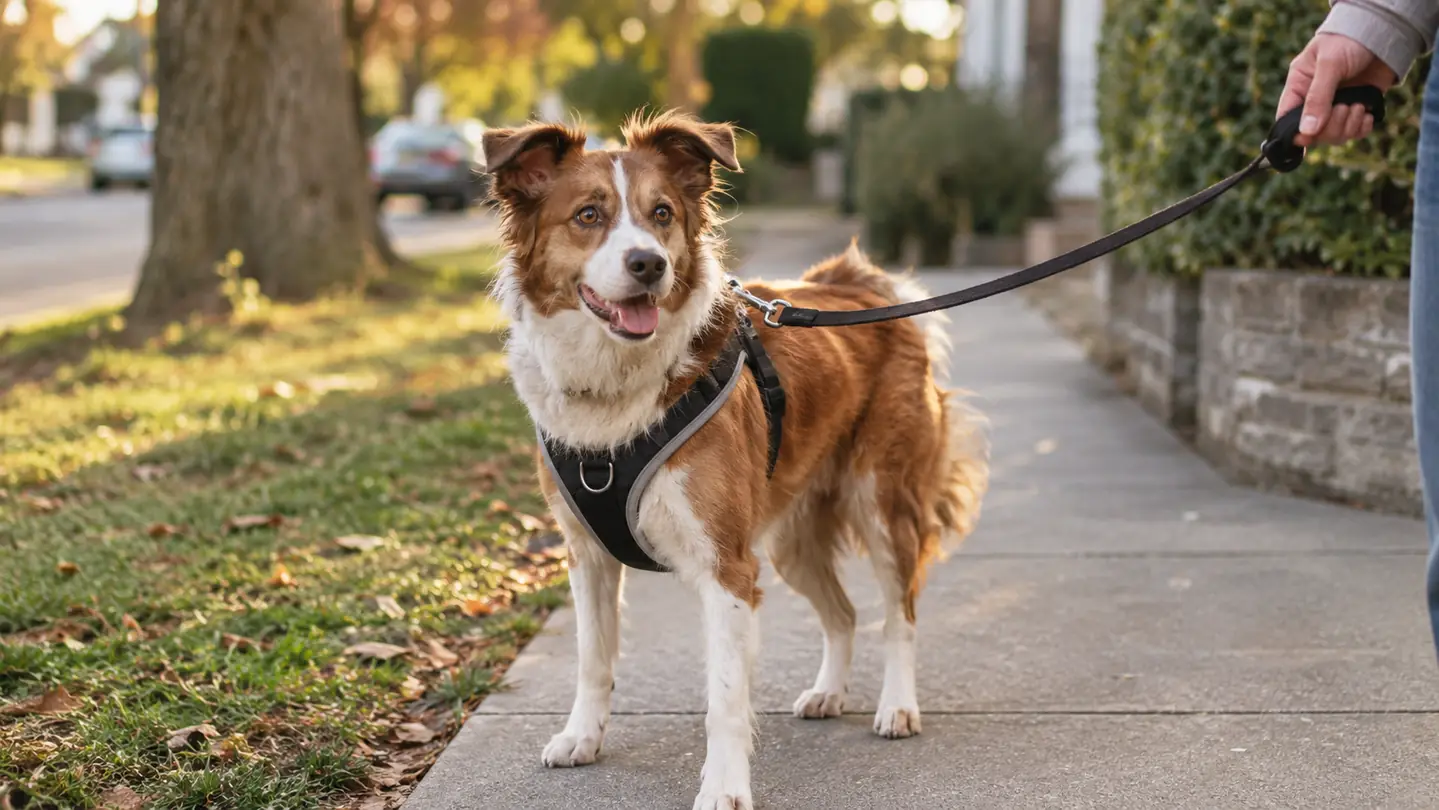
Biscuit came home from the county shelter at two years old, sixty-five pounds, and absolutely certain that every walk was a race. My wife June and I had raised dogs before, but not one with a chest like a plow. The first month, my shoulder ached every evening and I started picking routes by which side of the street had the fewest squirrels.
So I bought a back-clip harness first, because that is what the rack at the farm store had. Then a neighbor handed me a PetSafe Easy Walk and told me to try it for a week. Two years later I know exactly what each one does, and the short answer is this: for a dog that pulls, the PetSafe Easy Walk does more work for you. A back-clip harness is better for a dog that already walks politely, or one whose neck you are protecting. They are not competing versions of the same tool. They are two different tools that happen to look alike.
The short verdict: The PetSafe Easy Walk is the better pick for a hard puller, because the leash attaches at the chest and turns the dog back toward you instead of letting him lean into the strap.
If your dog walks you instead of the other way around, start here
The Easy Walk puts the leash clip on the front of the chest, so a lunge turns your dog sideways instead of forward. Fits medium breeds, one-year manufacturer warranty, and it goes on with quick-snap shoulder straps.
Amazon Check Today's Price on Amazon →The Difference in One Sentence
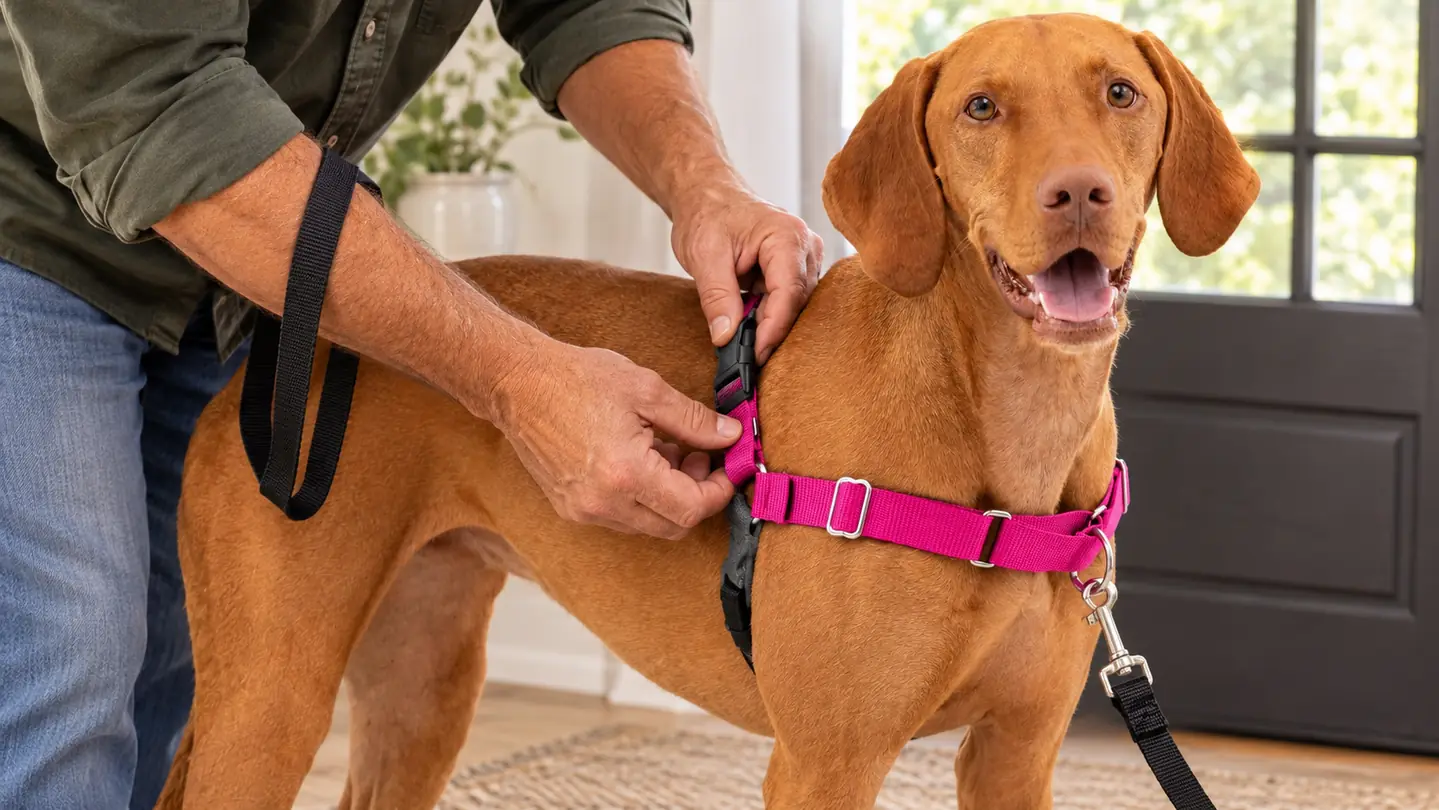
A back-clip harness attaches the leash above the dog's shoulders. A front-clip harness attaches it on the chest, below the neck. That six-inch difference changes the physics of the whole walk.
Here is what that means in practice. When the leash is on the back, your dog leans forward into the strap and his own body weight becomes the engine. The harder he pulls, the more comfortable the strap gets, because the pressure spreads across his chest and shoulders instead of landing on his throat. He is not being stubborn. He is being a dog, and the harness is quietly rewarding him for pulling. When the leash is on the front, a lunge pulls his chest sideways and his front feet stop tracking in a straight line. He has to slow down or turn. Nobody has to yank him.
The clearest demonstration I can give you happened about three blocks from my house, on the stretch of sidewalk with the low hedge where a squirrel lives. On the back clip, Biscuit hit the end of the leash and I went from standing up straight to leaning forward at an angle, heels dug in, both hands on the loop. Sixty-five pounds of Labrador does not care that you are sixty-one. On the front clip, same squirrel, same dog, same Tuesday morning. He hit the end, his chest turned toward me, his front feet crossed over each other, and he stopped because stopping was easier than pulling. I did not correct him. I did not say a word. The harness did the geometry and I just stood there holding the leash like a man at a bus stop.
That is also the honest limit of it. He still wanted the squirrel. He still lunged the first time, every time, for about a month. What the front clip bought me was two seconds, which is exactly long enough to turn around and walk the other way before he sets his weight into the strap. Two seconds does not sound like much until you have spent a month walking a dog without it.
Head to Head: PetSafe Easy Walk vs a Back-Clip Harness
| PetSafe Easy Walk | Back-Clip Harness | |
|---|---|---|
| Leash attachment | Front of the chest, below the neck | Top of the back, between the shoulders |
| Effect on pulling | A lunge turns the dog sideways, so forward momentum dies | A lunge lets the dog brace and pull harder |
| Pressure on the throat | None, the chest strap takes it | None, the back strap takes it |
| Fit and adjustment | Quick-snap shoulder straps plus a separate belly strap, sized for medium breeds | Varies by brand, usually a single over-the-head loop |
| Putting it on | Over the head, then buckle the belly strap, and the belly strap is a different color so you can see it | Usually one piece, one clip, done in a second |
| Freedom of movement | Chest strap can rub the armpits on a dog that is built wide | Full shoulder rotation, nothing across the chest |
| Best for a dog that pulls | Yes, this is what it is built for | No, it makes the problem easier for the dog |
| Best for a polite walker | Works fine, but more harness than you need | Yes, simple and comfortable |
| Long line or tie-out use | Not intended for it | Commonly used this way |
| Care | Hand wash only | Varies by brand |
Where PetSafe Easy Walk Wins
The Easy Walk wins the one thing most people are actually buying a harness for: it makes a pulling dog easier to walk while you train him. The martingale loop design puts gradual pressure on the shoulders when he leans, so the correction is proportional to his own effort, and it lets go the second he stops. That is the whole design. It was created by a veterinary behaviorist back in 2004, and it is past forty-eight thousand reviews on the listing, which tells you it has been on a lot of dogs by now.
It also wins on fit, and I did not expect that. The quick-snap shoulder straps and the separate belly strap mean you can adjust the chest and the girth independently, which matters on a dog shaped like a barrel with legs. The first week I had it, I put it on Biscuit three times a day with no walk attached, just the front door and back in, so he would stop treating the harness like a signal to lose his mind. By Thursday I could do it in about fifteen seconds without looking down. That matters more than it sounds. A harness you dread putting on is a harness that stays on the hook by the door.
The belly strap being a different color from the rest is not a cosmetic detail, either. On a wiggly dog at the front door, in the dark, at six in the morning in February, being able to see which strap goes under and which goes over is the difference between getting out the door and giving up and going back inside for coffee. I have put it on upside down exactly once, and that was enough. The whole thing weighs about seven ounces, so Biscuit is not carrying anything that tires him out, and it hand washes in the kitchen sink with the dog shampoo and hangs on the porch rail to dry.
No pressure lands on the throat, which is the main reason I stopped using a plain collar on Biscuit. I am not going to give you a medical lecture, because I am a retired mail carrier and not a veterinarian. But a sixty-five pound dog who lunges at a cat on a flat collar is putting all of that into his windpipe, and I could hear it from the other end of the leash. That sound is what sent me shopping in the first place, before the shoulder pain even entered into it. If your dog makes that sound on walks, it is worth fixing regardless of which harness you land on.
A back-clip harness lets a pulling dog brace against the strap. A front-clip turns him sideways and the pull dies on its own. Same walk, different physics.
Where a Back-Clip Harness Wins
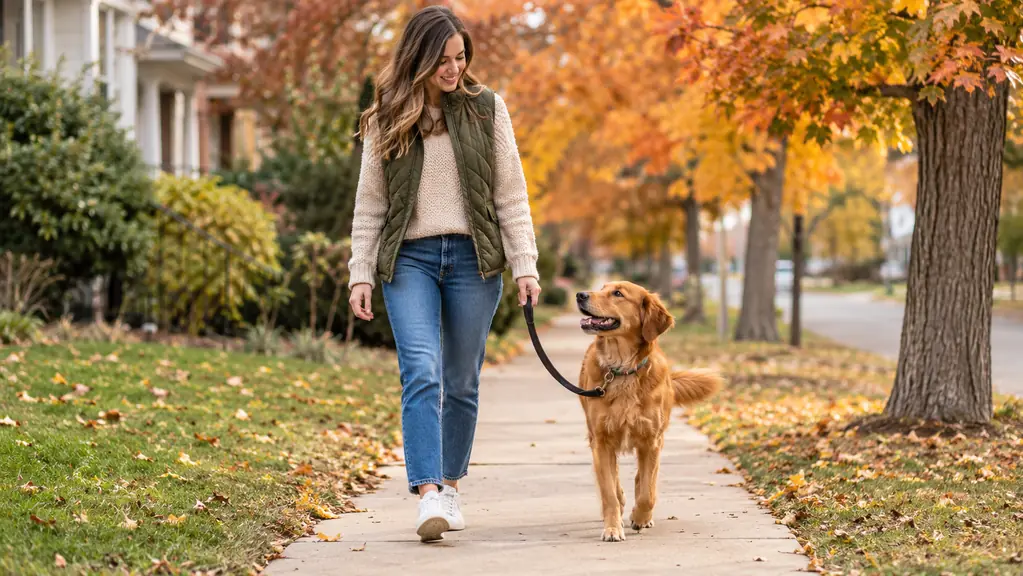
I have to give the back clip its due, because for some dogs it is genuinely the better choice and I got this wrong for about a month. If your dog already walks on a loose leash most of the time, a back-clip harness is simpler, faster to put on, and leaves his shoulders completely free. For a dog with a sensitive chest, a wide ribcage, or skin that chafes easily, having nothing across the front is a real advantage and not a small one.
It is also the better tool for anything that is not a structured walk. Long lines at the park, a tie-out in the yard while you rake leaves, a hike where the dog needs full range of motion over rough ground. That is not what the Easy Walk is built for and PetSafe does not claim otherwise. I use the back clip for the backyard and for the Saturday trip to the city park, and the front clip for the sidewalk loop. Two hooks by the door, one dog, ten seconds to choose.
The other thing a back clip wins is tolerance. About three weeks into the Easy Walk, Biscuit started getting a bare patch behind his front legs where the chest strap sat. Nothing dramatic, just pink skin where the hair had rubbed thin. I loosened the chest strap one notch and it cleared up in a few days, but it taught me to check under there once a week. Dogs with a wide chest and a narrow waist tend to run into this. It is not a reason to throw the harness out. It is a reason to look.
And here is the honest part that the reviews tend to skip. The Easy Walk is a training aid, not a fix. Biscuit still pulls when he sees another dog three houses down. The difference is that I can hold him with one hand and keep my feet, and I have the two seconds I need to ask him to turn around and take a treat. That is what the harness buys you. Time to train. It does not do the training for you, and any product that tells you otherwise is selling you something.
Two seconds of control is what makes training possible
The front clip gives you that window before your dog hits the end of the leash. Sized for medium breeds, hand wash only, backed by a one-year manufacturer warranty.
Amazon See the Easy Walk on Amazon →What I Liked
- Front chest attachment interrupts pulling instead of rewarding it
- No pressure on the throat
- Chest and belly adjust separately for a better fit
- Different colored belly strap makes it easy to put on correctly
- Quick-snap shoulder straps
- One-year manufacturer warranty
Where It Falls Short
- Chest strap can rub behind the front legs on a wide-chested dog
- Over-the-head entry takes practice with a wiggly dog
- Hand wash only
- Does not stop pulling on its own; still needs reward-based training
- Not intended for long lines or tie-outs
Who Should Buy Which
Buy the PetSafe Easy Walk if you have a dog that pulls hard enough to hurt your shoulder, if walks have turned into a wrestling match on the same three blocks every morning, or if you are working through a group obedience class and need a tool that helps between sessions. That is my situation, and it is most of the people I end up talking to at the park. It also suits anyone whose doctor or their own common sense has told them to stop letting a big dog hit the end of a neck collar. Walking Biscuit used to be the part of my day I dreaded. Now it is mostly just a walk, and that change happened in the first two weeks.
Buy a back-clip harness if your dog already walks reasonably well and you want something simple and comfortable, if your dog has a sensitive chest or rubs easily behind the front legs, or if you need a harness for the yard, the trail, or a long line. It is also the gentler introduction for a shy rescue who freezes up when something goes over his head. If you already own one, do not throw it away when you buy the other. They solve different problems and you will use both.
And if you have a puppy, honestly, get the back clip first and spend your money on treats. Work on loose-leash skills while he is light enough to hold with one finger, and save the steering gear for when he is grown and strong and has decided the world is a very exciting place.
One last thing, and I mean this as a neighbor and not a salesman. Neither harness trains your dog. What trains your dog is a pocket of small treats, a few short sessions a day, and stopping dead in your tracks every single time the leash goes tight, even when you are late and even when it is raining. Biscuit is three years old and we are still working on it. He is better than he was in March. He walks past the squirrel hedge most mornings now with only a small hop and a look back at me. That is the whole goal. Progress, patience, consistency. The harness just makes the practice possible.
Start with the tool that makes the walks trainable
Front-clip steering, no throat pressure, medium-breed sizing. If your shoulder hurts at the end of every walk, this is the smallest change you can make.
Amazon Check Today's Price on Amazon →