
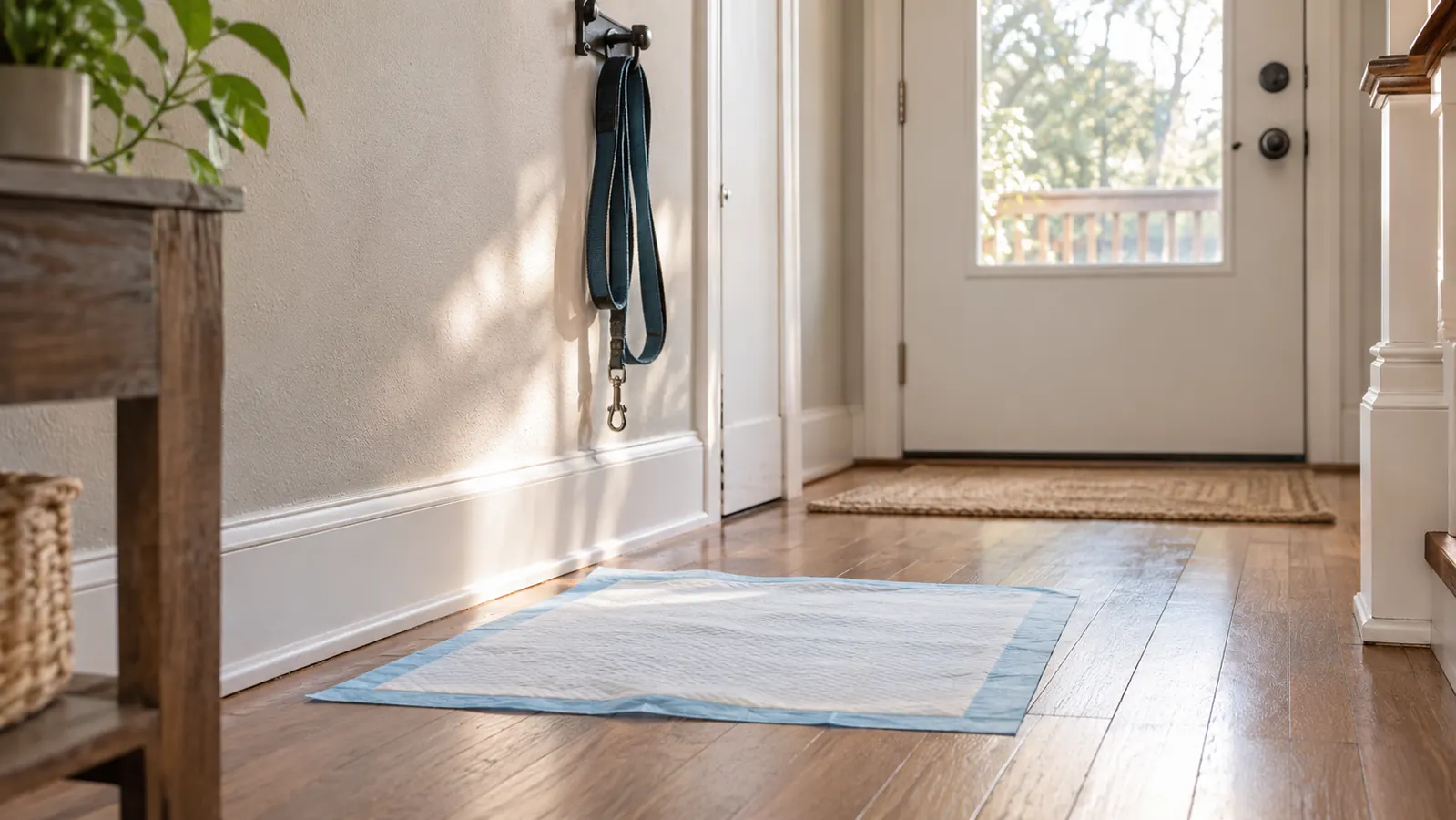
Biscuit came home from the county shelter at two years old with no idea what a back door was for. I had a sixty-five pound Labrador mix, a fenced yard, a laminate hallway that showed every mistake, and about as much puppy knowledge as a man who had spent 28 years walking a mail route and meeting dogs through a fence. What got us through those first weeks was not a clever schedule. It was a stack of potty pads by the door, a pocket full of treats, and patience.
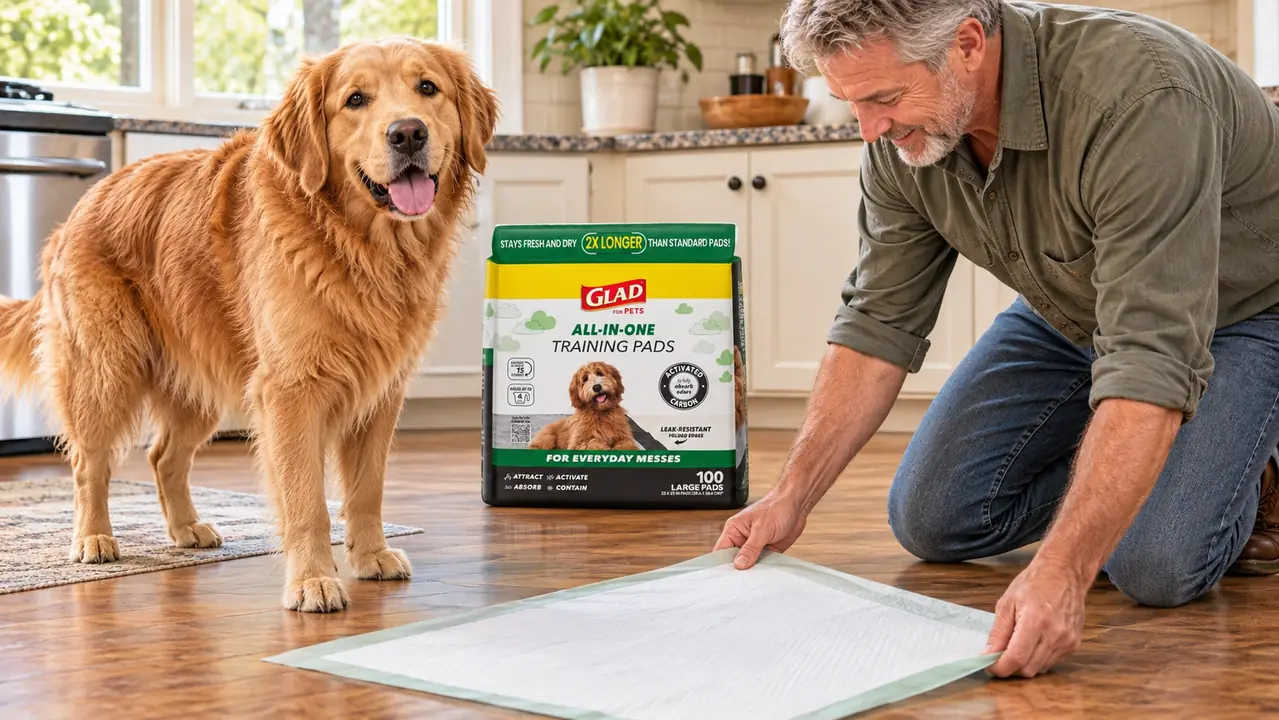
That is the short version of why I still keep Glad for Pets Puppy Pads in the hall closet now that Biscuit is three and mostly reliable. The box holds 100 pads, each one 23 by 23 inches, and each one rated to hold up to 4 cups of liquid. On a bad night, that is the difference between a ten minute mop and a floor that has to come out. Glad for Pets is not a trainer and neither am I. But a pad that actually holds is the least expensive piece of gear in this whole business, and it is the one I restock without thinking about it. Here are ten reasons it earns that spot.
The pad that holds 4 cups instead of spreading them
100 large pads, 23 by 23 inches, with a polymer layer that turns liquid into gel. Keep a box by the door and stop scrubbing at eleven at night.
Amazon Check Today's Price on Amazon →Folded edges stop the puddle before it reaches the grout
The first thing that fails on a cheap pad is the edge. Liquid lands in the middle, spreads fast, and finds the seam before you get across the room. Glad for Pets folds those edges over, and that fold is what buys you the fifteen seconds you need. When I was house training Biscuit, the pads that leaked were always the flat ones. The ones that held had that little lip around the border. It sounds like a small thing until it is your floor.
Amazon See the leak-resistant folded edge on the 100-count box →
Six layers stand between the puddle and the floor
A pad is not one sheet, and the layer count matters. This one runs six layers, among them a quilted top sheet, carbon tissue, absorbent polymer, a cushion lining and a PE film back. The top sheet lets liquid through and keeps the surface from staying swampy. The polymer does the holding. The back film is the part that touches your floor, and it is the reason a full pad does not paint your hallway. When you are comparing boxes in the aisle, read the layer count before anything else.
23 by 23 inches covers the whole landing zone
Small pads are a false bargain. A puppy does not aim. He walks in a circle, stops when the mood hits, and the spot he picks is rarely the spot you guessed. At 23 by 23 inches, one pad covers the area a mid-size dog actually uses, and two of them overlap into a runway for a hallway. When Biscuit first came home he would start at one end of the pad and finish at the other. That 23 inch square gave him room. A smaller pad would have made every trip a coin flip.
Up to 4 cups per pad, which matters with a big dog
This is the number I check now. Each pad holds up to 4 cups, and the polymer layer turns that liquid into gel. A nine pound puppy does not test that limit. A sixty-five pound dog with a full bladder absolutely does. If you are fostering a lab or a shepherd or anything with real size to it, the difference between a pad rated for a cup and a pad rated for 4 is the difference between a change and a flood. Buy for the dog you have, not the dog in the picture on the box.
Liquid turns to gel, so the cleanup is a pickup
The polymer does something quietly useful. It turns liquid into gel. That means the pad does not slosh when you lift it by one corner, it does not drip across the kitchen on the way to the trash, and it does not leave a wet trail for you to find later with a sock. I have carried a bad pad across a kitchen. I have also carried a good one. One of those trips is a chore and the other is an event.
Each pad is rated for up to 4 cups, and the polymer turns that liquid into gel. That is why the walk to the trash is a carry, not a cleanup.
Carbon tissue goes after the smell, not just the wet
Wet is the part you see. Smell is the part your guests notice. The carbon tissue layer in these pads is there to work on odor between changes, and the box is labeled activated carbon. I am not going to tell you a pad makes a hallway smell like a bakery. I will tell you that the difference between a carbon pad and a plain one is noticeable in a spare room on a humid Missouri afternoon, and that is reason enough to keep them around.
Stays fresh and dry 2X longer than standard pads
The listing states these stay fresh and dry twice as long as standard pads. Read that as fewer changes, and fewer changes means fewer gaps when the floor is bare. Most leaks I have dealt with were not a pad failing under a dog. They were a pad that had already been used twice and left down an extra hour. A pad that lasts twice as long cuts down on that window. That is not a trick, it is just math about how often you walk past that door.
A 100 count box means you stop rationing
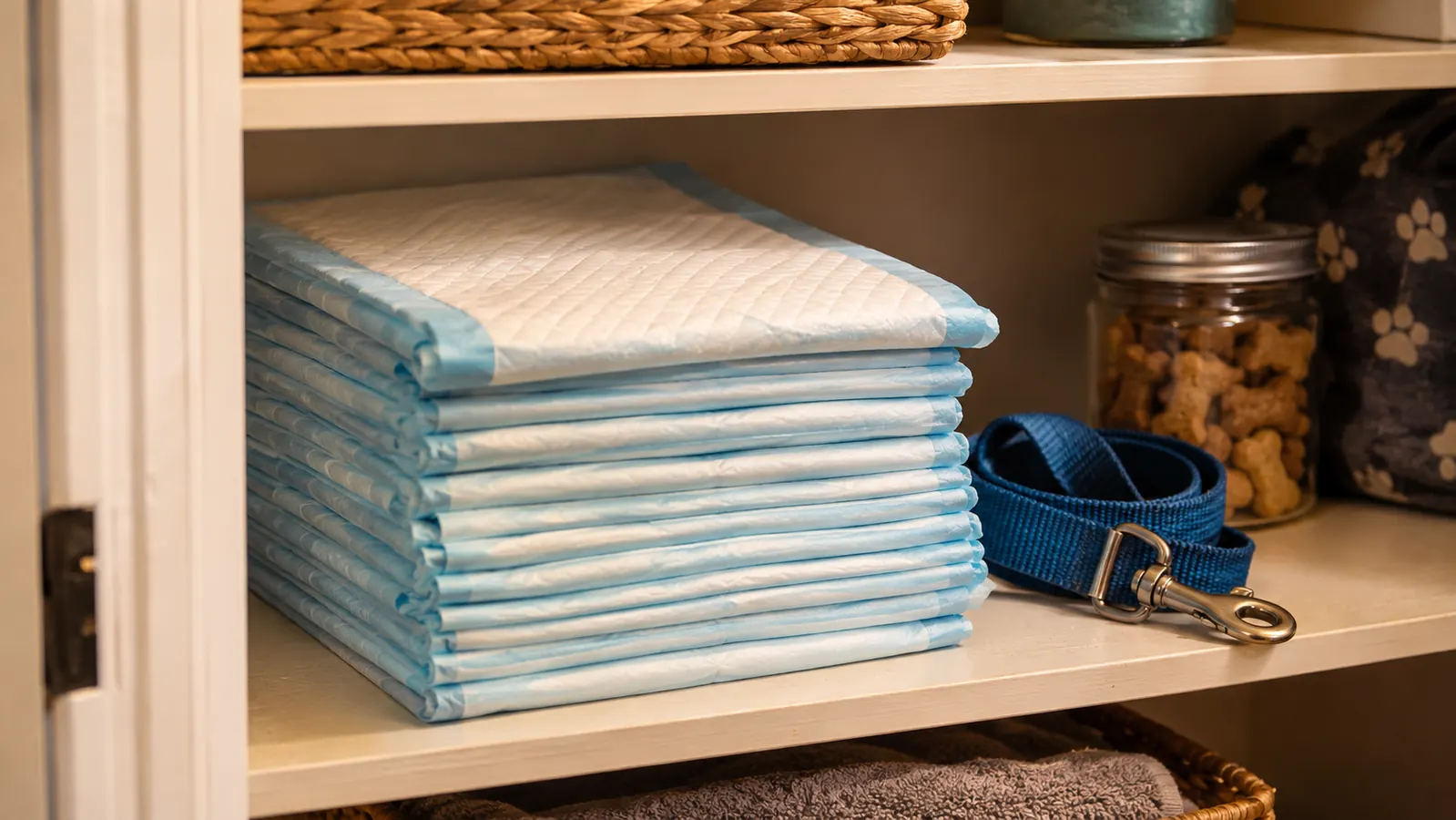
Running out is how floors get ruined. When you are down to your last three pads you start doing things you should not do. You leave a used one down an extra day, or you move it from the kitchen to the hall and hope. A 100 count box takes that pressure off. You can put two down in the hallway, change them when they need it, and stop thinking about the supply. The box itself is not large, just over 3 pounds, and it fits on a closet shelf beside the leash.
Covers the days the weather or your knees say no
Sedalia gets ice. It also gets weeks of rain, and at 61 my knees have opinions about both. There are evenings when a trip around the block is not happening, and a pad by the door keeps the routine from collapsing. That is all a pad is for in my house, a backup for the days that do not cooperate. It does not replace the walk, and it should not. But a backup that holds means one bad week does not undo three good ones.
Protects the floor and your evening
Laminate and hardwood do not forgive standing water. A seam that swells stays swollen. I watched a neighbor pull up a hallway over a dog he loved, and it was not a cheap afternoon for him. A pad is not a guarantee against that. Nothing is, with a dog in the house. But it moves the odds, and it moves your evening too. Ten seconds to fold and toss beats an hour with a bucket and a rag, and it leaves you in a better mood for the training session that actually teaches something.
What I'd Skip
I would skip using pads as the entire plan. A pad manages the mess while you teach the habit. It does not teach the habit by itself. Biscuit learned the back door because I took him out every two hours, waited him out, and paid him in treats when he went. The pad was there for the misses in between. If the pad becomes the destination forever, you have a pad trained dog, and that is a different project from a house trained one.
I would also skip leaving a soaked pad down to save one, skip the thin pads that fold up like a paper airplane, and skip putting the pad in a room the dog never uses. Put it where he already goes. And skip the scolding when he misses. A dog who is worried about your reaction starts hiding his messes behind the couch, which is a good deal worse than the mess. Keep the pad, keep the treats, keep your voice down, and give it time.
Keep a box by the door and skip the midnight mop
100 pads, each 23 by 23 inches, up to 4 cups each, with carbon tissue and a polymer layer that turns liquid into gel. For everyday training at home, this is the box I restock.
Amazon See the Glad for Pets 100-Count Box on Amazon →