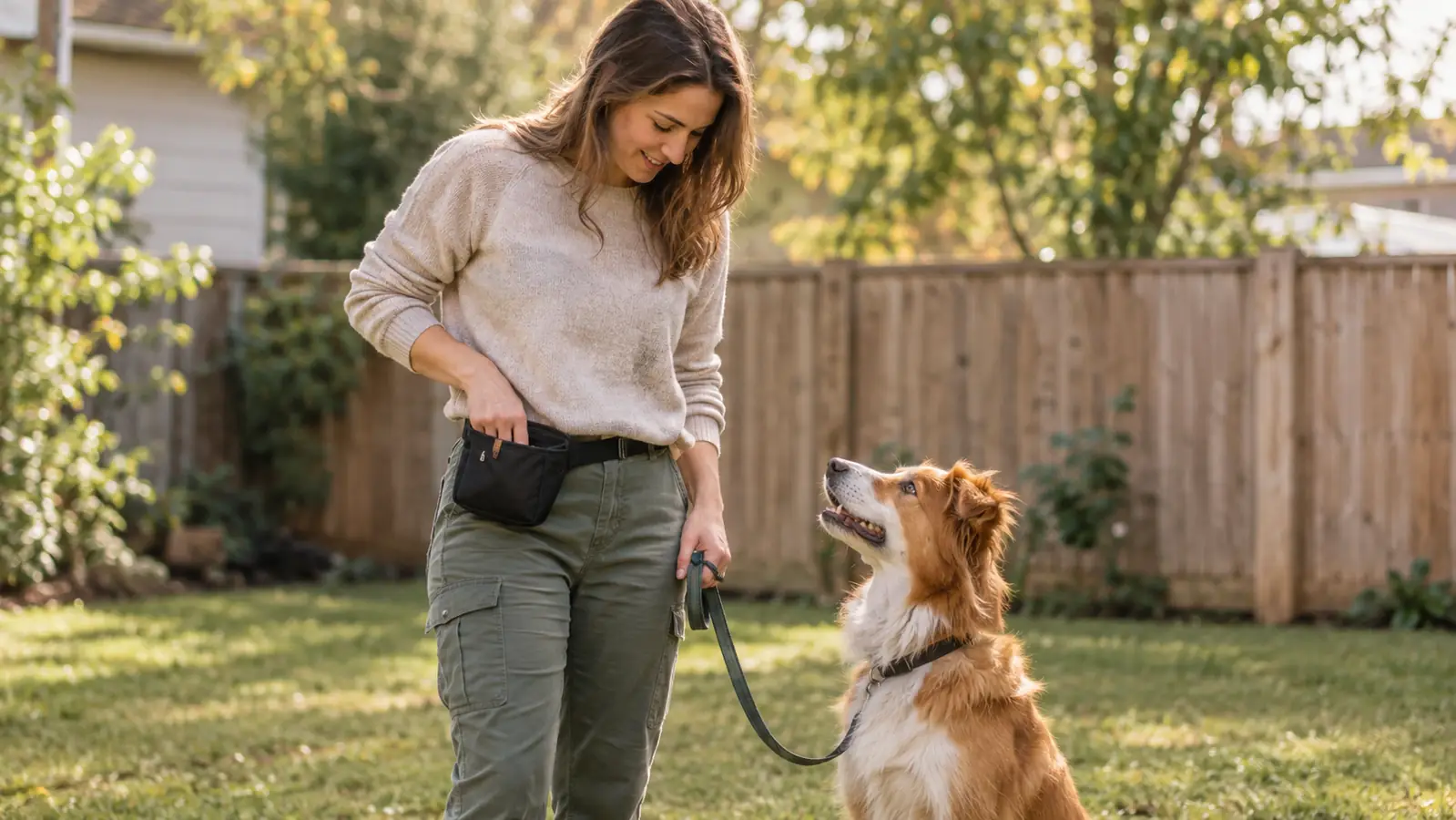
Training a dog comes down to one thing you cannot buy at the store: timing. I learned that the slow way with Biscuit, our three-year-old Labrador mix we adopted from the county shelter. I would ask for a sit, he would do it, and then I would spend four or five seconds digging a treat out of my jacket pocket. By the time the kibble got to his mouth he had already stood up and started sniffing the grass. He was not being stubborn. I was late.
A treat pouch fixes that, not because it is fancy but because it puts the reward where your hand already is. I have been using the LANNEY dog treat pouch for a few months now, training at home in short sessions the way I do, and the change was immediate and a little humbling. Here are ten reasons it makes timing easier, roughly in the order they mattered to me.
Put the reward where your hand already is
The LANNEY treat pouch keeps the food, the clicker and the bags in one spot at your waist, so the treat shows up while the dog is still doing the thing you asked for.
Amazon Check Today's Price on Amazon →The treat is already in your hand when the dog finishes
This is the whole idea in one line. When the kibble lives in a pouch at your waist, your hand drops and comes back up already holding food. No pocket, no zipper, no digging past a set of keys and a receipt. With Biscuit, a sit used to get rewarded about five seconds after he did it. Now it is closer to one. Same dog, same treats, same kitchen floor. The only thing that changed was the distance between his mouth and the reward.
The cord lock opens with one hand, which is all you have
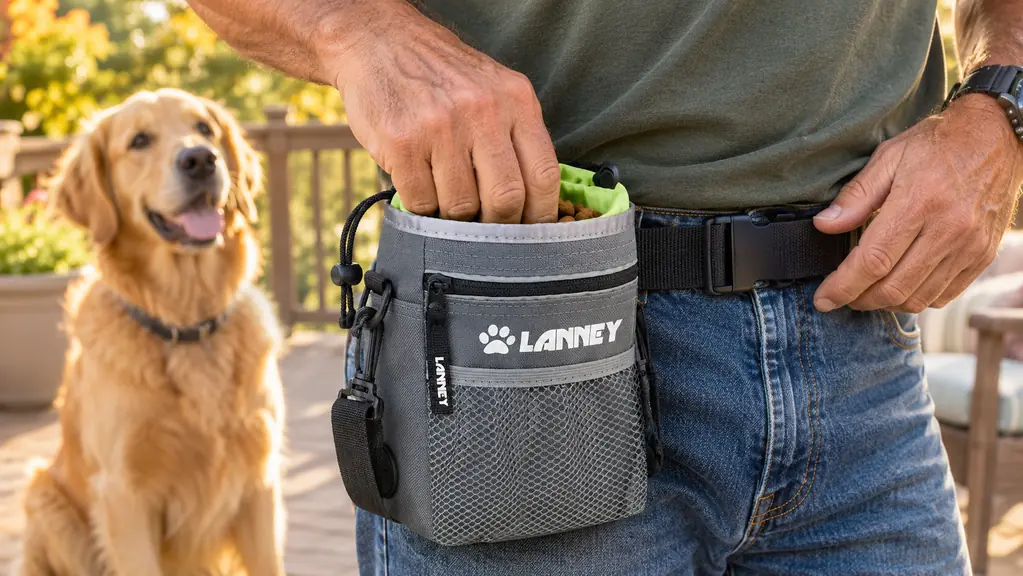
Most of the time one of my hands is on a leash and the other one is doing the work. The LANNEY pouch opens by pressing the cord lock and pulling, so I can open it with the same hand that is about to reach inside. That sounds like a small detail until you try prying a stiff fabric mouth open with two fingers while a sixty-five pound dog is deciding whether to investigate a squirrel.
One fill covers a whole session
I used to train out of a sandwich bag in my jacket pocket, and I would run out right about the time Biscuit was getting the hang of something. Then I would stop, walk back to the kitchen, refill, come back out, and wonder why he had lost interest. The LANNEY pouch holds enough kibble for a full session and then some. Nothing kills a training streak faster than a refill break in the middle of it.
It stays where you put it when you bend down
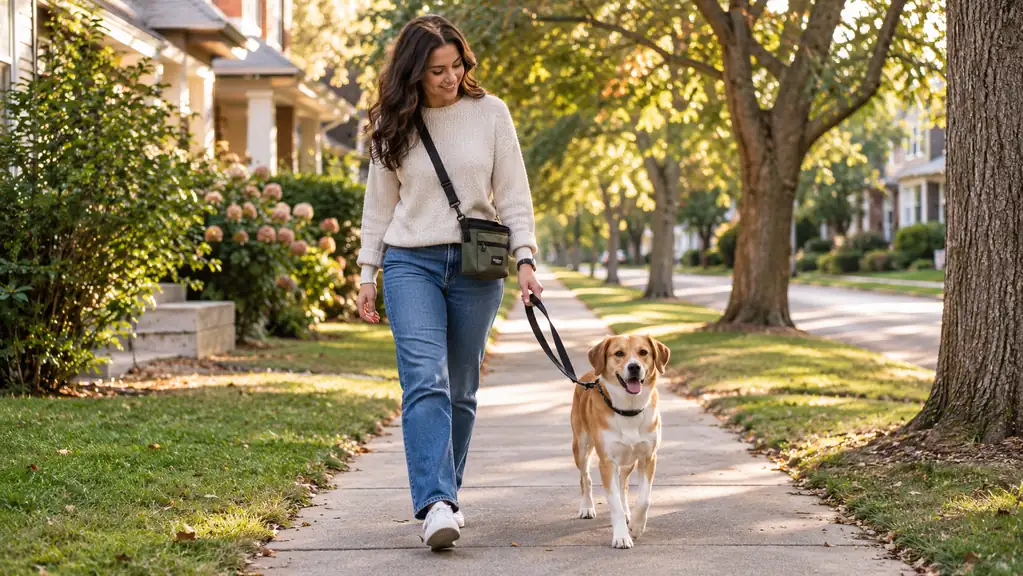
The pouch comes with an adjustable waist belt and an adjustable shoulder strap. The listing calls it three ways to wear and I mostly use two: the waist belt for work in the backyard, the shoulder strap for walks around the neighborhood where I want both hands free. Either way it sits against the body instead of swinging off a hip. When I bend down to reward Biscuit at eye level, it does not flip over and dump kibble in the grass.
The clicker rides along, so the mark and the reward are one motion
The pouch comes with a clicker that has a loud, clean snap to it. I keep it right where my hand already goes. Mark, then treat, then move on. Having both things in the same place removed a step I did not even know I was losing. Fair warning that it is genuinely loud, which is perfect out in the yard and startling in a small kitchen at six in the morning.
Your phone stops being the thing you pat for
There is an enlarged zippered pocket sized to fit most phones. Mine goes in there with my keys. This matters more than it sounds. Before, I would finish a rep, feel for my phone to check the time or a note I had made, and lose the thread of the session entirely. Now the phone is zipped away and I am not reaching for it in the middle of a teach.
Bags on both sides, so a walk does not end on a sour note
There are two waste bag dispensers on the sides. I load one and keep a spare in the other. Having a bag on the pouch means cleanup happens without a search through four jacket pockets, which keeps the walk moving and keeps me from getting short with the dog. Small piece of gear, but it changes the mood of the second half of a walk more than you would think.
The back pocket keeps the food compartment food only
A back zippered pouch takes keys or a few loose bills. The point is separation. Whatever goes in the main compartment is what the dog smells, so I keep that to food and nothing else. Keeping keys and trash out of the food area means I am not fishing around in kibble for a car key with one hand while Biscuit waits to find out whether he did it right.
It takes a beating and brushes off
The outside is 600D oxford cloth with a PVC coating, and the whole thing weighs about eight ounces. Mine has been set down on wet grass, dragged across a gravel driveway, and used as a landing pad for a Labrador's nose. Mud comes off the surface instead of working its way into the fabric. That counts for something if you train outdoors in Missouri in February.
It turns training into a habit you will actually keep
Here is the unglamorous reason this pouch helped more than any video I watched. It made a session easy to start. Grab the pouch off the hook, clip it on, walk outside. Ten minutes and done. Biscuit gets three or four short sessions a day now instead of one long one when I happened to remember. Progress with a dog comes from repetition, and repetition comes from whatever is easiest to actually do.
Five seconds of fumbling is five seconds of the dog learning that sitting was not the point.
What I'd Skip
Two honest caveats before you buy anything. First, this pouch is not a substitute for the work. It makes the reward fast, but you still have to decide what you are rewarding and be the same about it every single time, and no piece of gear does that part for you. Second, the pouch is size medium, 7.5 by 7.5 by 1 inches, and it holds more than I expected. If you train with high value food like cheese or hot dog, load a small handful and stop there. An overfilled pouch makes for slow hands, which is the exact problem you are trying to solve.
The treat should land while the dog is still sitting
Short sessions, fast hands, one place for the food. That is most of what made the difference for us, and the LANNEY treat pouch is the cheap half of that equation.
Amazon Check Today's Price on Amazon →