
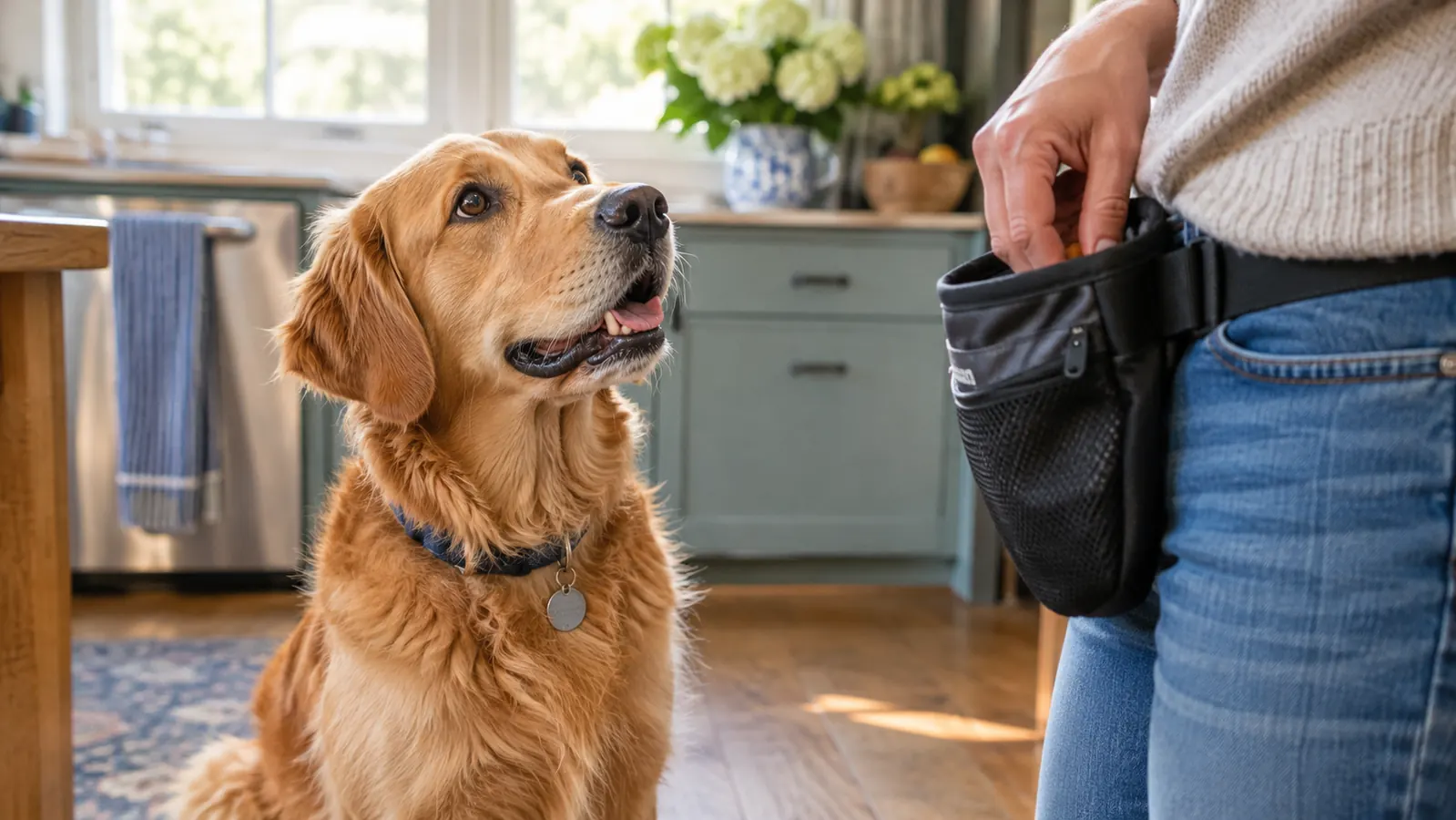
Biscuit came home from the county shelter at two years old, sixty-five pounds of Labrador mix and pure enthusiasm. He pulled me down the sidewalk, greeted guests with both front paws, and heard the word come as a suggestion rather than an instruction. I am sixty-one. I walked a mail route in Sedalia for twenty-eight years, so I have met every kind of dog there is, and I still had to admit that this one had me beat. What finally turned things around was not a collar or a lead. It was a plain LANNEY treat pouch with a clicker in the front, and the habit of keeping it on me.
I have used that pouch for the better part of a year now. Most days it goes on twice, sometimes three times: in the backyard for short sessions, on the sidewalk for leash work, and at the city park on weekends. Long enough to know where it rubs, how the stitching holds after a few thousand openings, and whether it earns its place on a walk that has nothing to do with training. Here is the honest version.
The Quick Verdict
A light, simple pouch that opens one handed, so a treat is in your fingers in about a second. The cord lock, the two waste bag dispensers and the included clicker are the parts I would miss. It is not waterproof and the clicker runs loud.
Amazon Check Today's Price →The Pouch I Strap On Before Every Session
Waist belt, shoulder strap, two waste bag dispensers and a loud clicker in the box. This is the piece of gear that made three short sessions a day easier than skipping them.
Amazon Check Today's Price on Amazon →How I've Used It
I keep the clicker in the small zippered pouch at the back and the treats in the main bin. The waist belt goes on before I open the back door, which sounds like a small thing and is not. The reason I train Biscuit three times a day instead of once is that the treats are already on me. When the treats live in a bag on the kitchen counter, the session gets skipped. When they are strapped to my hip, I can catch him sitting instead of jumping and pay him for it in the same second.
Most sessions run under five minutes. I ask for a sit, a down, a hand touch, and a couple of steps of loose leash in the yard, then we quit while he is still winning. The pouch makes that rhythm possible because I can get a treat out without looking down and without unzipping anything. I carried a mail bag on my shoulder for eight hours a day for twenty-eight years, so I am particular about straps. This one sits close to the body and does not swing when I bend to pick something up.
The shoulder strap comes out when we walk to the park. On the way over I wear it across the body, and once we are on the grass I move it to the waist. That is a thirty second change, and it means I am not carrying a bag in one hand while holding a leash in the other. Biscuit is sixty-five pounds and still has opinions about squirrels, so one hand for the leash is not a luxury.
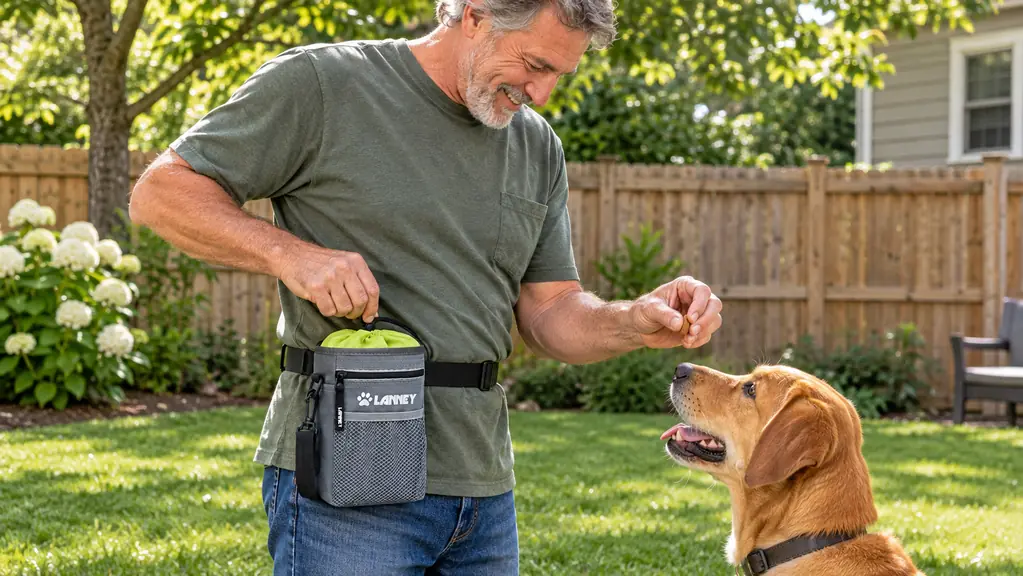
What the Three Carry Options Actually Do
The LANNEY listing calls it three ways to wear. I have used two of them steadily, the adjustable waist belt and the adjustable shoulder strap, and I have not once needed a third. Both straps adjust, which matters if you are built like me and not like the person in the product photo. The belt goes over jeans in summer and over a coat in January, and it stayed where I put it through a Missouri winter. The shoulder strap is the better pick for a walk where training is only part of the trip.
Where it earns its keep is storage. There is one enlarged zippered pocket in front that fits most phones, and mine goes in with room to spare, which means I am not setting it down in the grass and forgetting it. A second zippered pouch at the back holds keys and a folded bag. Two waste bag dispensers, one on each side, mean I am never the man asking a stranger for a bag at the park.
The Cord Lock Does Most of the Work
The opening is a cord lock. You press it and pull, and the top opens wide enough to get a hand in. What that buys you is a treat in your fingers in about a second, without looking, which is the whole job when you are trying to pay a dog inside the two seconds he remembers what he did. A zippered top slows that down. So does Velcro, which is also noisy, and the noise tells the dog a treat is coming before you have decided to give one.
It took me about a week to stop fumbling it. Early on I pressed the lock with one hand and pulled with the other and dumped a handful of kibble in the yard twice. What fixed it was practice in the kitchen with an empty pouch, opening and closing it twenty times while the coffee brewed. Now it is one motion. If your hands are not what they were at forty, as mine are, give yourself that week before you decide it is awkward.
The clicker in the box is loud. Louder than the one I bought separately, and loud enough that I noticed it the first time I used it. For Biscuit that is fine. He is not sound sensitive, and a crisp click cuts through park noise. If your dog flinches at the vacuum or the doorbell, use a quieter clicker or a marker word instead. The pouch does not care what you put in it or what noise you make.
After Months of Daily Use, What Held Up
The outer is 600D oxford cloth with a PVC coating, and after a year of being set down on a driveway, dragged through a hedge and wiped off with a wet rag, it still looks like a pouch and not like a rag. The coating is why it wipes clean. Crumbs and dried liver dust come off with a damp cloth in about ten seconds. What the coating is not is a waterproof shell. In a steady rain the inside gets damp near the seams, so I empty it and let it air dry instead of leaving kibble in it overnight.
The stitching around the cord lock is where a pouch like this usually gives out, and mine has not. The belt has not stretched. The zippers still run. The one thing I noticed is that the main compartment collects crumbs in the bottom corners, and if you do not tip it out every couple of weeks those crumbs turn into a paste and the pouch starts to smell like old liver. That is not a defect. It is what happens when you put food in a bag.
At 8.1 ounces and about seven and a half inches square, it is small enough that I forget I have it on and big enough that a session's worth of treats fits without packing anything. Size Medium, per the listing. I have never wished it held more. Twice I have wished it had a divider so the good treats did not mix with the ordinary kibble, but that is a preference and not a flaw.
The Walks That Have Nothing to Do With Training
Most of the year the pouch goes on for the morning walk even though no training happens on it. A waste bag dispenser on each side means there is always a bag. The front zippered pocket holds my phone, the back zippered pouch holds keys and a spare bag, and I stopped carrying a second bag for the walk because I was already wearing one. That is about as strong a recommendation as I can give a piece of dog gear.
On weekends we drive to the city park. Biscuit gets a long line, I get a coffee in one hand, and the pouch sits across my body where I can reach it without putting anything down. When we stop to work on recall, I swing it around to the waist. June has started calling it my purse, which I have chosen to ignore.
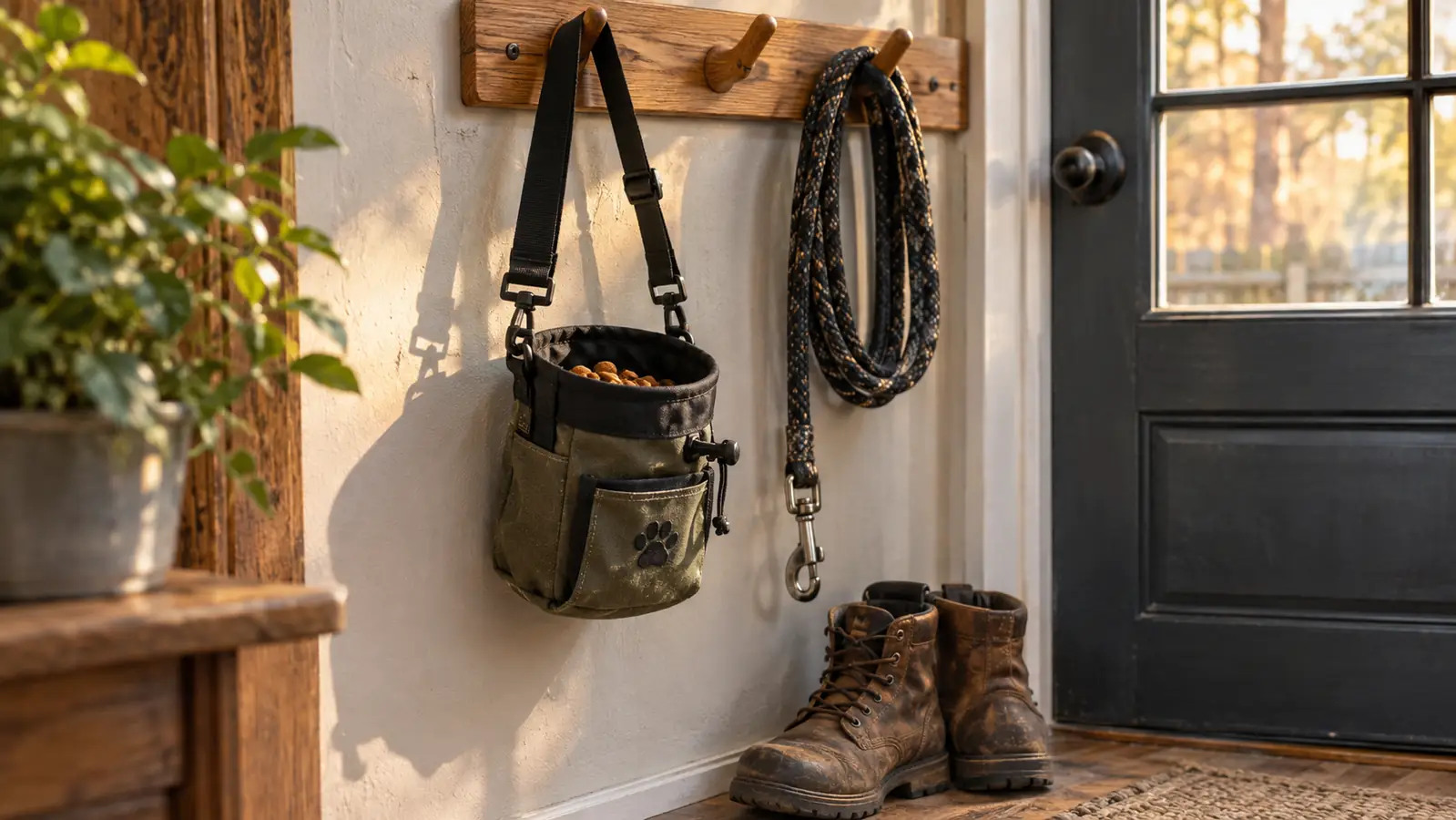
Training a Rescue With It: Short Sessions, Small Wins
Biscuit was two when we got him and had never been taught much of anything. He is three now, sixty-five pounds, and he still pulls when a rabbit crosses the sidewalk. What has changed is the recall. We worked it in the kitchen first, then the fenced yard, then the park on a long line, and every one of those reps got paid out of that pouch. I will not tell you the pouch trained my dog. The pouch made paying him easy enough that I actually did it, several hundred times, which is what training is.
The group class we took at the pet store ran six weeks. The instructor had a pouch on her hip the whole time, and I noticed that the dogs who got paid fastest were the dogs who learned fastest. That is the whole argument for a pouch in one sentence. You cannot out-train a slow treat delivery. Standing in the yard unzipping a jacket pocket while your dog wanders off is how a good rep turns into a wasted one.
Where It Falls Short
It is not a sealed container. Leave it in a hot car with kibble in it, or out in the rain, and you will know. The clicker runs loud, which I covered already. The belt buckle is a simple plastic buckle. It has not failed on me, but it is not hardware I would trust on a climb. It is a treat bag.
One more thing, and this is on me and not the pouch. When it is full and I wear it on the waist, it sits forward enough that bending straight over tips it. I have learned to squat instead of bending, which is better for my back anyway. If you bend over a hundred times a day, expect to spend the first week changing how you pick things up.
What I Liked
- Cord lock opens one handed, so a treat is in your fingers in about a second
- Adjustable waist belt and adjustable shoulder strap both hold position
- Two waste bag dispensers, one on each side
- Enlarged zippered front pocket fits most phones; second zippered pouch at the back for keys
- 600D oxford cloth with a PVC coating wipes clean with a damp cloth
- Clicker included, loud enough to cut through park noise
- 8.1 ounces, so it does not feel like carrying a bag
Where It Falls Short
- Not waterproof; inside gets damp near the seams in steady rain
- Main compartment has no divider, so treats mix together
- Clicker is louder than some dogs will like
- Crumbs collect in the bottom corners if you do not empty it
- Plastic belt buckle is basic hardware
The pouch did not train my dog. It made paying him easy enough that I actually did it, several hundred times.
Who This Is For
The LANNEY treat pouch suits people who are training a puppy, a rescue, or an adult dog who never got the basics, and who are doing it at home in short sessions. It suits anyone who wants treats on their body at all times, who walks in a neighborhood where a bag has to come along, and who would rather buy one simple thing than assemble a system. It suits older hands too, once you give the cord lock that first week.
If you have been putting off training because it felt like a production, with a bag and a clicker and a written plan, this is the smallest version of that production. Pouch on, treats in, five minutes in the yard, done. I have run a session in slippers and a bathrobe. The dog did not seem to mind.
Who Should Skip It
Skip it if your dog works for a toy and not for food, because a pouch full of kibble is dead weight in that case. Skip it if you train in a downpour or in water, since the seams are not sealed. Skip it if you want one bag to hold a full day of food and a training kit, because this is a session pouch and not a backpack. And skip it if you already own a pouch you like. There is no reason to own two.
Buy It Once, Then Stop Thinking About It
The best gear is the gear you forget you are wearing. That is what this one became for me, and it is why I still reach for it before every session with Biscuit.
Amazon Check Today's Price on Amazon →