
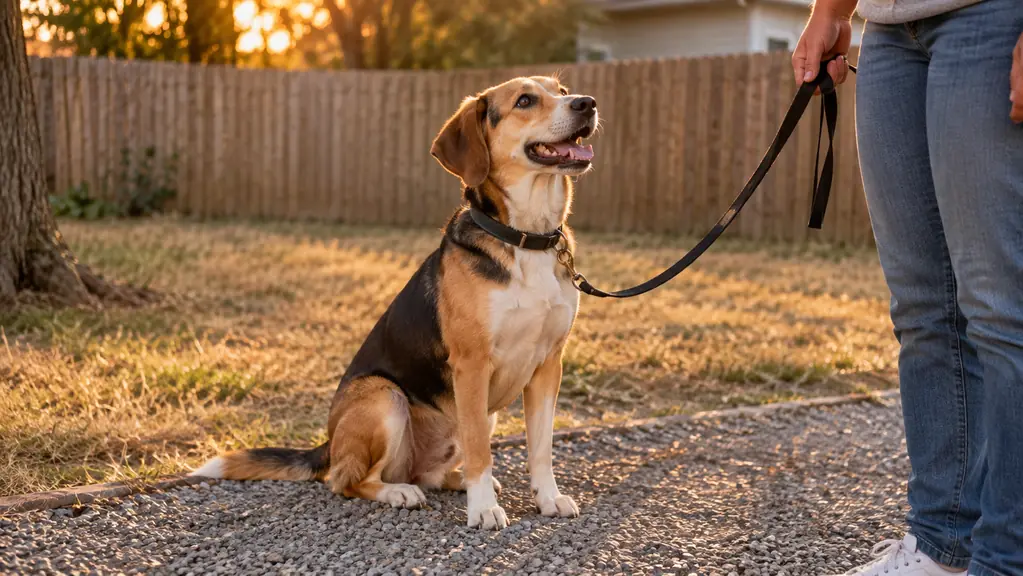
Biscuit came home from the county shelter at age two, sixty-five pounds of Labrador mix and pure forward momentum. He pulled on the leash, jumped on June's sister when she visited, and treated the word come as a friendly suggestion. For the first month I trained him the way I had trained every dog since I was a kid: jacket pocket stuffed with kibble, hope for the best. By the end of a walk that pocket held warm crumbs, a little dog hair, and one very confused grocery receipt. That is when I ordered the LANNEY Dog Treat Pouch, mostly so I would stop finding treats in the laundry basket.
Here is the short answer after six weeks of running both setups side by side. If a session involves more than about ten repetitions, the pouch wins and it is not close. If you are calling your dog in from the back step once before dinner, your pocket wins, because it is already on you and there is nothing to grab on the way out the door. The useful question is not which one is better in general. It is where that line sits for a person training an ordinary dog in the kitchen, the yard, and around the block.
| LANNEY Treat Pouch | Pocket Treats | |
|---|---|---|
| Where the treats live | Main compartment on a cord lock, one enlarged zippered pocket that fits most phones, one back zippered pouch for small items | The same pocket as your keys, your phone and a used tissue |
| Getting one out | Press the cord lock and pull, one hand, while the other hand holds the leash | Reach in blind and hope the treat is somewhere near the top |
| Crumb situation | 600D oxford cloth with a PVC coating, so crumbs stay in the pouch and out of the wash | Crumbs in the seam of your jacket, lint on the kibble, grit at the bottom |
| Wet weather | The PVC-coated outer sheds a drizzle and the kibble stays dry | A cotton pocket soaks through and the treats go soft by the second block |
| Something to carry | 8.1 ounces at 7.5 by 7.5 by 1 inches, worn on an adjustable waist belt or shoulder strap | Nothing extra to remember, nothing extra on your hip |
| Money out of pocket | One purchase, made once | Nothing to buy, ever |
| Clicker | Ships with a clicker that has a loud noise, so it carries across a yard | Nothing, unless you already carry one in that same pocket |
| Waste bags | Two waste bag dispensers on the sides, always loaded | A rolled bag in with the treats, which is a smell you learn to accept |
| Best for | Daily training walks and a few short sessions a day at home | One quick recall repetition in the backyard before dinner |
How I Compared Them
I am not a trainer. I spent twenty-eight years walking a mail route here in Sedalia, Missouri, which means I have met every kind of dog there is, some on the far side of a screen door and a few on my side of it. My method was not scientific. For six weeks I ran one morning walk with treats in my jacket and the evening walk with the pouch on my belt. I split my two short kitchen sessions the same way, one in the pocket, one in the pouch, and I did not change the order.
What I paid attention to was friction. Not how the pouch looked on the belt, but how many seconds passed between deciding to reward Biscuit and getting food in front of his nose. On the pocket walks that gap was two or three seconds, because I was fishing around and he was already looking at a squirrel. With the pouch it was closer to one, because I could press the cord lock, pull, and take a small handful without looking down at my own hip.
The second thing I tracked was whether I actually carried treats at all. That sounds silly until you have stood in your own driveway patting four pockets while your dog stares at you with his head tilted. A setup that is annoying to put on gets left on the counter. Six weeks in, the pouch hangs by the door with the leash, and I have not once walked out without it. My jacket pocket, on the other hand, has been empty on at least three evenings I can name.
The real difference is not the pouch. It is that a pouch you can open without looking turns a three second reward into a one second reward, and a dog learns faster from the second one.
Where the LANNEY Treat Pouch Wins
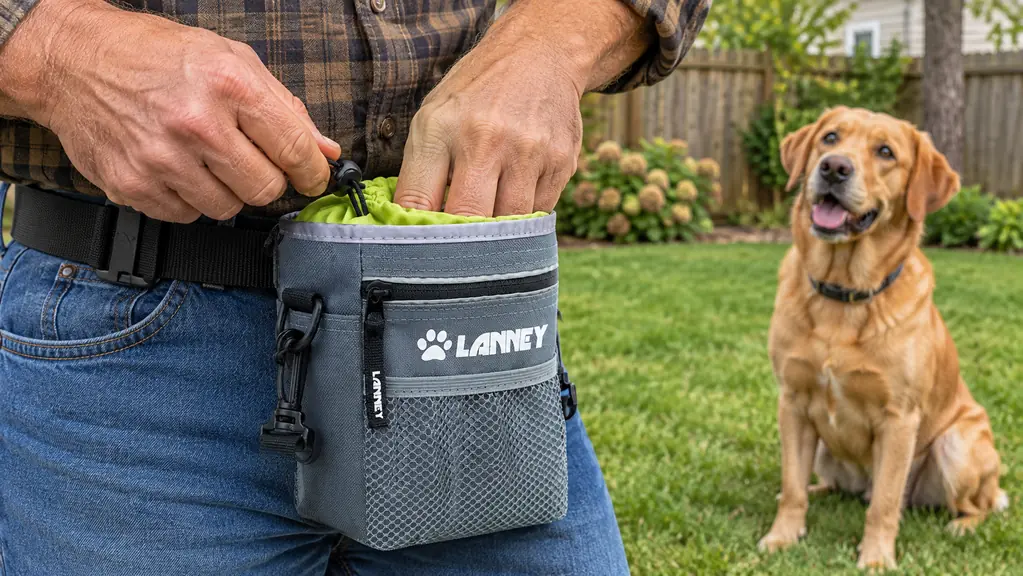
The cord lock does the actual work. You press it, you pull, and the opening stays put while you get your hand in and out. That sounds like a small thing until you try to reward a dog who is mid-pull toward a passing bicycle. On a loose leash walk with Biscuit, the difference between a reward that lands while he is still beside me and one that lands after he has surged ahead is the difference between teaching him something and teaching him nothing. The pouch lets me mark and pay in the same half second.
The clearest test came on the second Tuesday, on the sidewalk along Ohio Street, when a mail truck came up behind us and Biscuit decided it was the most exciting thing that had ever happened. Pocket treats would have meant a two second fumble while he danced at the end of the leash and I lost the moment entirely. Instead I pressed the cord lock with my thumb, got three pieces of kibble into my palm, and had them under his nose before the truck cleared the corner. He sat. Not because the pouch is magic, but because I could pay him while he was still doing the thing I wanted. I repeated that six times over two blocks and his head stayed around for most of it, which is the best report card I have ever gotten from that dog.
Then there is the matter of where everything else goes. The enlarged zippered pocket fits most phones, which matters more than I expected, because I used to carry mine in my back pocket and sit on it every time I knelt to reward. There is a back zippered pouch for small items, and two waste bag dispensers on the sides. The practical result is that the leash, the bags, the phone, and the treats are not all fighting for the same square inch of jacket. Nothing gets dropped in the grass and nothing gets sat on.
The adjustable waist belt and shoulder strap have been more useful than I gave them credit for. On cold mornings I wear the pouch over the coat on the shoulder strap, because a belt under a winter jacket is a nuisance. In summer it goes around the waist and I forget it is there. The PVC-coated 600D oxford cloth wipes down with a damp rag after a session of cheese cubes, which is the only cleaning routine I have ever stuck with. And the clicker it ships with is genuinely loud, loud enough that June can hear it from inside the house.
Where Pocket Treats Win
The pocket costs nothing and it is already on you. There is no hook by the door to remember, no strap to adjust, no eight ounces on your hip while you are trying to put on a boot with one hand. For a person who trains in short bursts, three or four repetitions and then done, the pouch is a solution to a problem you do not have. I would not tell my neighbor Dale to buy one so he can reward his old beagle twice on the way to the mailbox.
Pockets also win for quiet indoor work where you are already sitting on the floor. When I am working on a settle in the living room, I do not want a belt and a strap and a clicker dangling off me. I want six pieces of kibble in my shirt pocket and my hand near the dog's nose. Kitting up for that is the kind of small hassle that ends with the gear in a drawer and the dog untrained.
The weight is real and I will not pretend otherwise. The pouch measures 7.5 by 7.5 by 1 inches and weighs 8.1 ounces empty, and when you fill that main compartment for a fifteen minute session it pulls the belt down on one side. My first two walks I had it adjusted too loose and spent the whole time hitching it back up, which is exactly the kind of small annoyance that makes a person leave a thing on the counter. It took three tries to find the belt setting where it sat still when I knelt down and did not ride up when I stood. Once I found it, I stopped thinking about it. But the first week I thought about it plenty, and a pocket never once needed adjusting.
And there is an honesty point here. If your dog is food motivated and you train a handful of times a day, you may never need more than a pocket. My wife June has had dogs her whole life and has never owned a pouch. She also does not run fifteen minute sessions with a dog who has decided the neighbor's cat is more interesting than she is. Different jobs, different tools, and no reason to pretend otherwise.
If the reach-in delay is costing you reps, this is the fix
The LANNEY Dog Treat Pouch holds a session's worth of kibble on an adjustable waist belt or shoulder strap, opens one-handed on the cord lock, and ships with a clicker. One enlarged zippered pocket for your phone, a back pouch for small items, and two bag dispensers on the sides.
Amazon Check Today's Price on Amazon →What I Liked
- One-handed opening on the cord lock, so you can hold the leash and reward at the same time
- Adjustable waist belt and shoulder strap, which makes it wearable over a winter coat
- Enlarged zippered pocket fits most phones, plus a back pouch and two waste bag dispensers
- PVC-coated 600D oxford cloth wipes clean with a damp rag
- Ships with a loud clicker, so you are not buying a second thing
Where It Falls Short
- 8.1 ounces is real weight on a belt, and you will notice it the first few walks
- It is one more item to remember on the way out the door
- You will still refill it between sessions, so it does not remove that chore
- The belt takes a few tries to get adjusted to where it does not ride up when you kneel
The Small Things That Changed My Routine
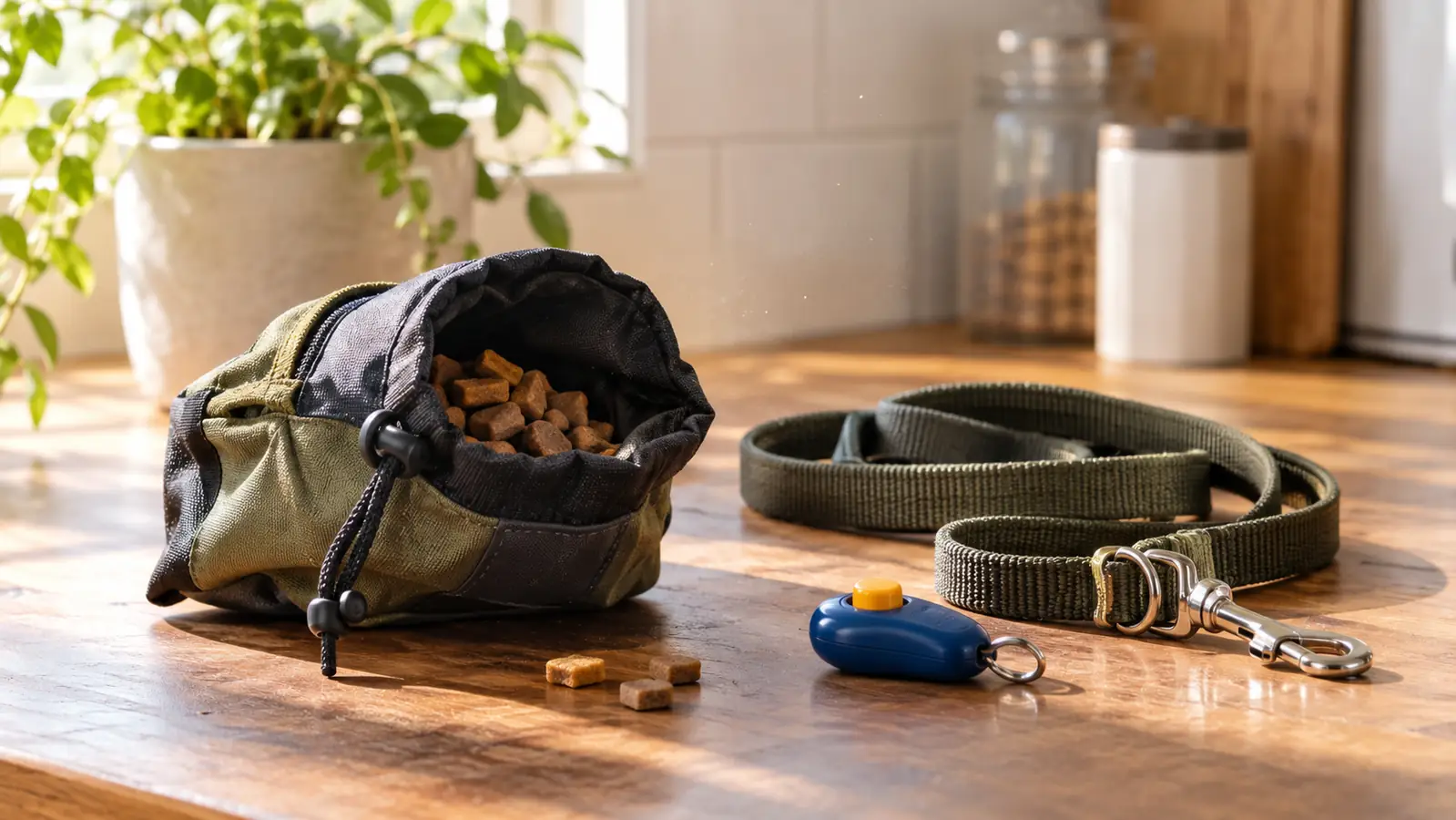
Two waste bag dispensers sounds like a marketing line until you have one empty dispenser and a dog who has chosen the far end of the park. I keep both loaded now, and I have not done the embarrassing pocket-pat since. The back zippered pouch has become where the bag of emergency cheese cubes lives, and the front zippered pocket holds my phone and the house key. That is four separate places for four separate things, which is more organization than I have applied to my own garage.
The clicker was the surprise. I had been using a word, which works fine in the kitchen and disappears in the wind at the park. The loud click carries. It took Biscuit about four sessions to connect it to food, and now the sound alone gets his head around. I keep it on the shoulder strap in the cooler months and clip it to the belt loop in summer. None of this made him a different dog. It made the same dog easier to talk to.
The other change was smaller and I did not expect it to matter. I started loading the pouch the night before, seven in the evening, right after I hang the leash back on its hook. A quarter cup of kibble goes in the main compartment, two bags get checked, and the clicker goes back on the strap. It takes about forty seconds. What that forty seconds bought me is the difference between a man who decides at seven in the morning whether he feels like training and a man whose gear is already loaded and waiting. There were two mornings in the first week where I would have skipped the session entirely, and I did not, because the pouch was already packed and Biscuit was already sitting by the door giving me a look. Forty seconds at night, and it moved the whole habit.
Who Should Buy Which
Buy the LANNEY treat pouch if you train several short sessions a day, if your dog is easily distracted outdoors, or if you have ever cut a walk short because you ran out of treats. Buy it if you are working on loose leash walking, where the reward has to land in under a second or it teaches the wrong thing. Buy it if you are tired of crumbs in the laundry and kibble going soft in a wet pocket. It is a tool for people who are doing reps, not for people who are thinking about doing reps.
Skip it, at least for now, if you train indoors once in a while with a handful of kibble, if you hate anything riding on your waist, or if your dog works happily for a tennis ball and a scratch behind the ear. A pouch does not train a dog. It removes a small delay, and the delay only matters if you are running enough repetitions for it to add up. Start with your pocket. If you find yourself frustrated by the fishing, that is the signal to order one.
One less thing between you and the next repetition
Six weeks in, the pouch lives on the hook by the door and the jacket pocket is retired. If your training sessions keep stalling while you dig for a treat, the LANNEY Dog Treat Pouch is the cheapest fix I have found for that specific problem.
Amazon See the LANNEY Treat Pouch on Amazon →