
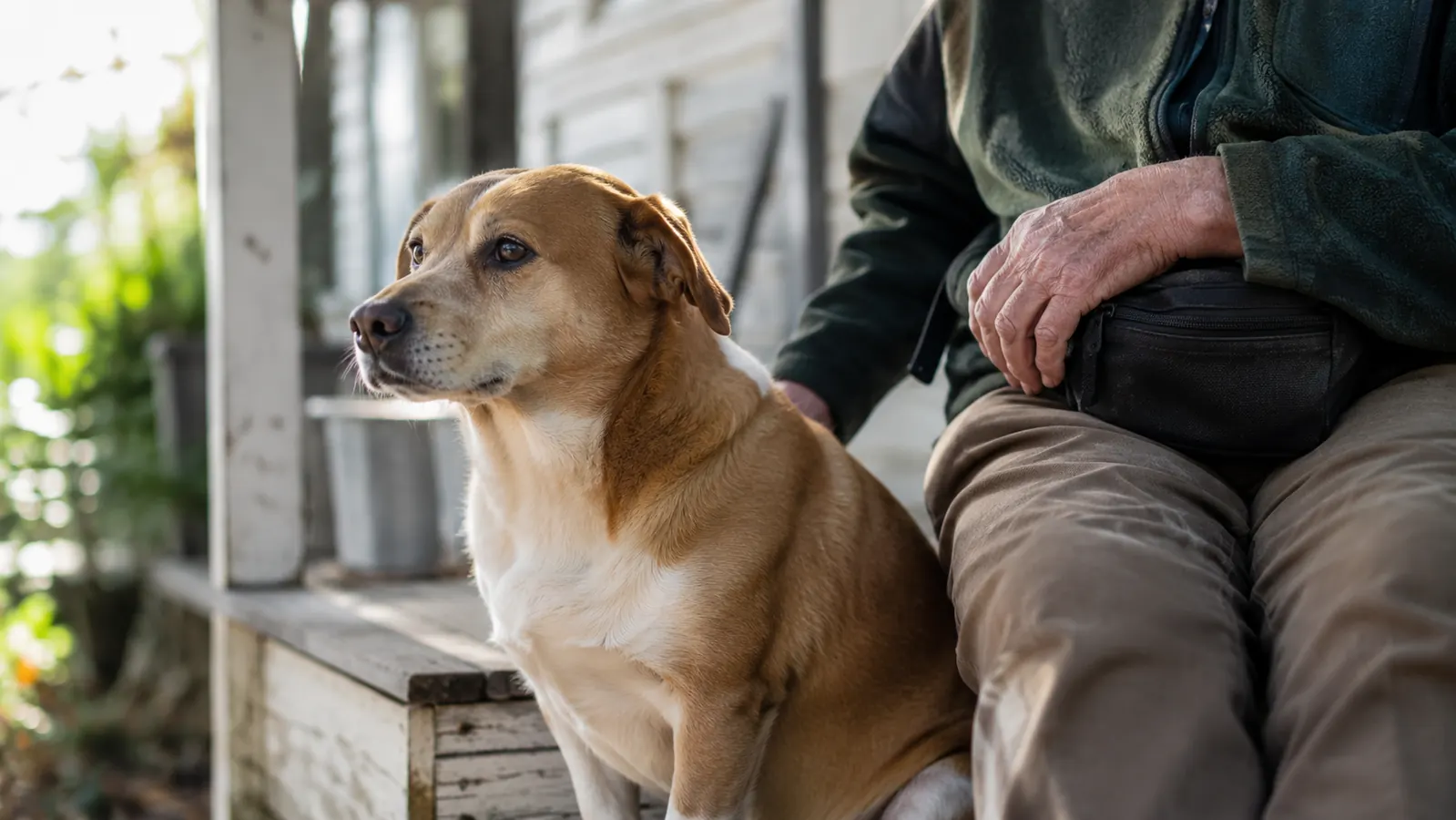
The first week we had Biscuit, I did what every new dog owner does. I stuffed a handful of kibble in my jacket pocket and figured that was that. By Thursday I had crumbs in the lining, a grease stain on my good coat, and a dog who had learned my hip was a vending machine that sometimes opened by itself.
Biscuit is a 3-year-old Labrador mix, about 65 pounds, adopted from the county shelter when he was 2. He came to us pulling hard on the leash, jumping on anyone who came up the walk, and treating his own name as a suggestion. I am 61 and I spent 28 years walking a mail route in Sedalia, so I have met a lot of dogs. Knowing dogs and training one are not the same job. I found that out quick.
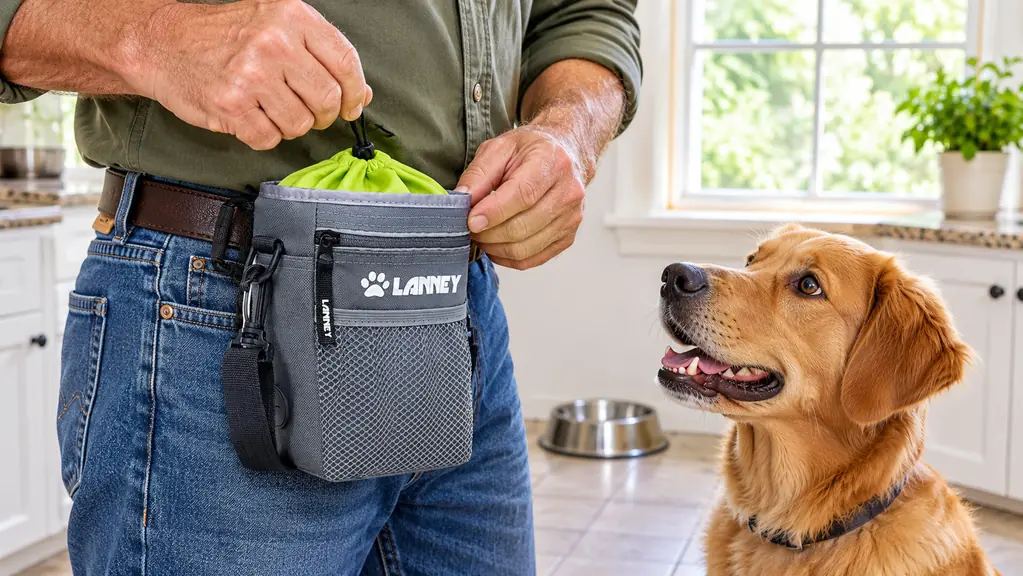
So a few weeks in, I bought a LANNEY treat pouch. Not because I had researched pouches. Because it was the one that showed up when I searched, it was not expensive, and I was tired of washing my jacket.
What I learned, mostly by getting it wrong, is that training does not fail because of the dog. It fails because the treat is in the wrong place at the wrong moment. You need it in your hand in under two seconds or the lesson is already gone. Fumbling in a coat pocket for a kibble while your dog drags you toward a squirrel is not a training moment. It is a wrestling match.
A treat that takes four seconds to reach is not a reward anymore. It is a rumor.
The fix for the four-second fumble
LANNEY's treat pouch wears at the waist or across the shoulder, opens with one pull on the cord lock, and comes with a clicker. It is the difference between rewarding your dog and apologizing to him.
Amazon Check Today's Price on Amazon →Here is what actually changed. The pouch is 600D oxford cloth with a PVC coating, which sounds like marketing talk until you have had bacon treats sweating in a canvas pocket for an hour. I wipe it out with a paper towel and it is fine. The top opens with a cord lock. You press it and pull, one hand, and the bag is open. One hand matters more than I expected, because the other hand is usually holding a leash.
It came with an adjustable waist belt and a shoulder strap. I wear it on the belt, June wears it over the shoulder when she takes Biscuit out, and neither of us has to think about it. There is a zippered pocket on the front that holds my phone, which is the size of a small brick, and a second zippered pouch on the back for keys and baggies. Two waste bag dispensers sit on the sides. It is 7.5 by 7.5 inches and weighs about 8 ounces, so it does not drag at your hip the way a full jacket pocket does.
The clicker that comes with it is loud. Louder than the one from our group class at the pet store. I use it for marking, then follow with a treat from the pouch, and Biscuit caught on to that sequence in about three days. That is not me being a good trainer. That is the clicker doing the timing work I was never quick enough to do with my voice.
I want to be fair about the limits. If you already have a system that works, you do not need this. If you keep treats in a ziplock in your back pocket and your dog is doing fine, congratulations, save your money. And if your dog is a serious resource guarder or has bitten someone, a pouch is not your answer. That is a conversation with a vet behaviorist, not a piece of gear.
What the pouch does is remove friction. Training Biscuit at home happens in tiny windows, maybe three or four times a day, four or five minutes each. Before the pouch, half of that window was me digging for food. Now I clip it on when I put my shoes on. The session starts when the belt goes on, and Biscuit knows it. He sits before I ask.
Six months in, he is not a different dog. He still pulls when a rabbit crosses the sidewalk. But he checks in with me on the walk now, which he never did before, because checking in has paid him roughly two hundred times out of that pouch. He waits at the door. He comes when called in the backyard, most of the time, unless there is a squirrel situation. That is not a fixed dog. That is a dog making progress, which is the honest version of what training looks like.
What I'd Tell You If We Were Sitting at My Kitchen Table
I would tell you to stop shopping for the perfect training tool and buy the plain one that removes your excuse. Most people who fail at this fail because they set up a whole plan and never start. A pouch on a belt is a start. June keeps hers by the back door with a scoop of treats in it, so the gear is already loaded when the dog needs a lesson.
I would also tell you the treats matter more than the bag. Small, soft, fast to eat. If your dog has to crunch for ten seconds, you have lost the moment. I cut soft training treats into pieces the size of a pencil eraser and keep them in the pouch, and I leave the bag open when I am working with him.
And I would tell you to give it six months, not six days. Biscuit did not get better because of LANNEY. He got better because the LANNEY pouch meant I showed up two hundred more times than I would have otherwise. The gear just made it easy to be consistent, and consistency is the whole thing.
Buy the pouch, then put it by the door
Three ways to wear it, one-pull opening, a clicker included, and two waste bag dispensers so walks are covered too. Set it by the door tonight and training starts tomorrow morning.
Amazon Check Today's Price on Amazon →