
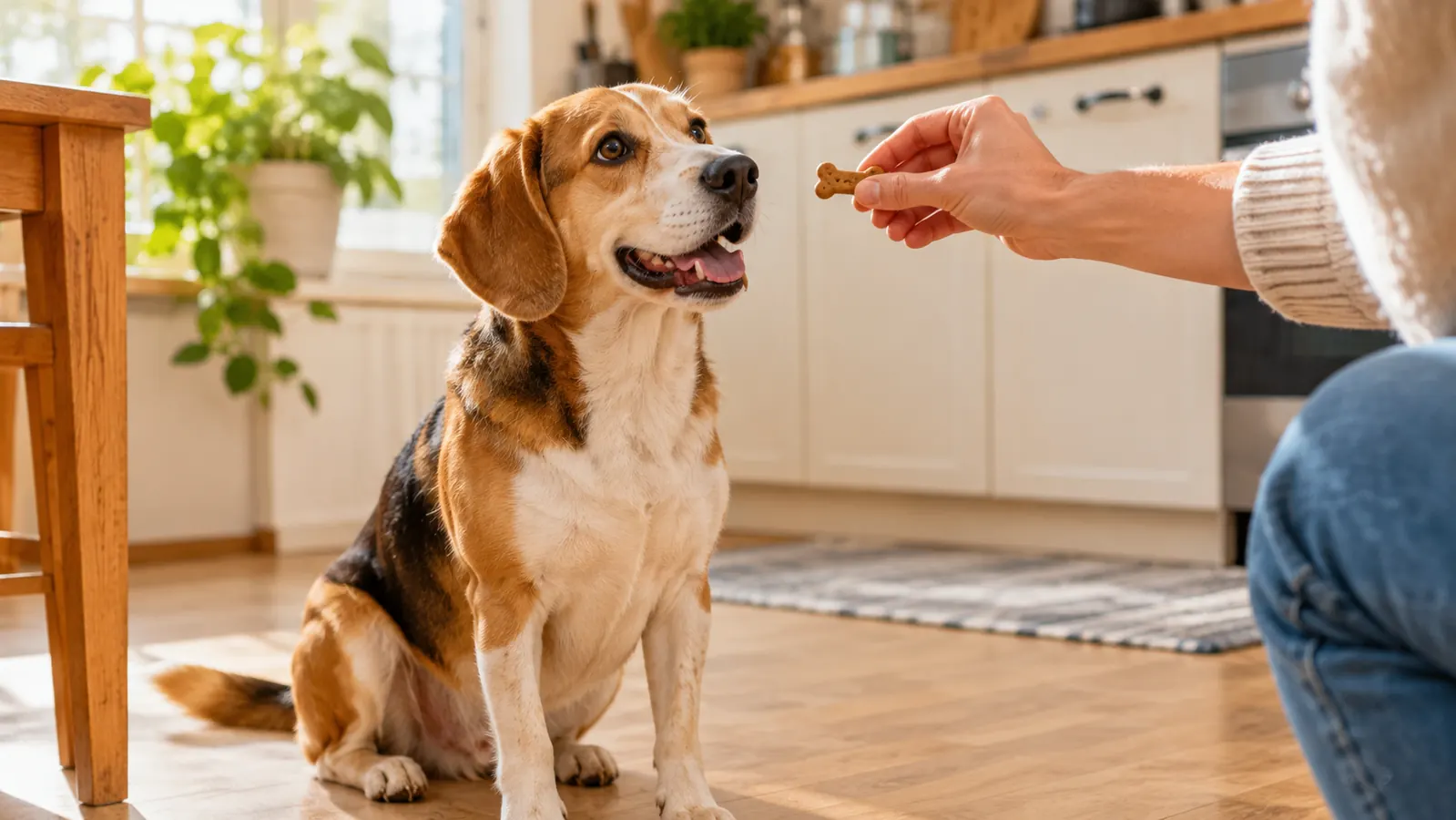
An honest review of a dog treat feels like a strange thing to write. It is a treat. You put it in your hand, the dog takes it, and everybody moves on with their day. But I have spent the better part of two years holding small pieces of food over a Labrador mix named Biscuit while he learned not to drag me down the sidewalk, and I can tell you the treat matters more than most people admit. Blue Buffalo Bits ended up in our kitchen because the cheap box from the grocery store was not holding Biscuit's attention and the free samples from our one group class were gone inside a week. Here is what I wish somebody had told me before I bought a 19-ounce bag.
The short version, the part that never makes it into the listing photos: these are soft, moist, chicken-first treats that pinch apart in your fingers, which is exactly what you want when a dog is collecting fifteen or twenty rewards in a four-minute session. They are also exactly what you do not want sitting in the bottom of a jacket pocket in a Missouri July. I will get to that. Below is the longer version, including the things I would tell a friend to weigh before they order a bag, and the one kind of dog I would steer somewhere else entirely.
The Quick Verdict
A genuinely useful soft training treat for daily repetition, undercut by a pocket problem, a portion problem, and a bag that is not a training pouch.
Amazon Check Today's Price →The bag I keep reordering even after writing the cons list
Soft enough to break in half, real chicken first on the panel, and it holds a distracted dog's attention on the sidewalk. If that is the problem you are trying to solve, this is the bag.
Amazon Check Today's Price on Amazon →What Nobody Tells You About Blue Buffalo Bits
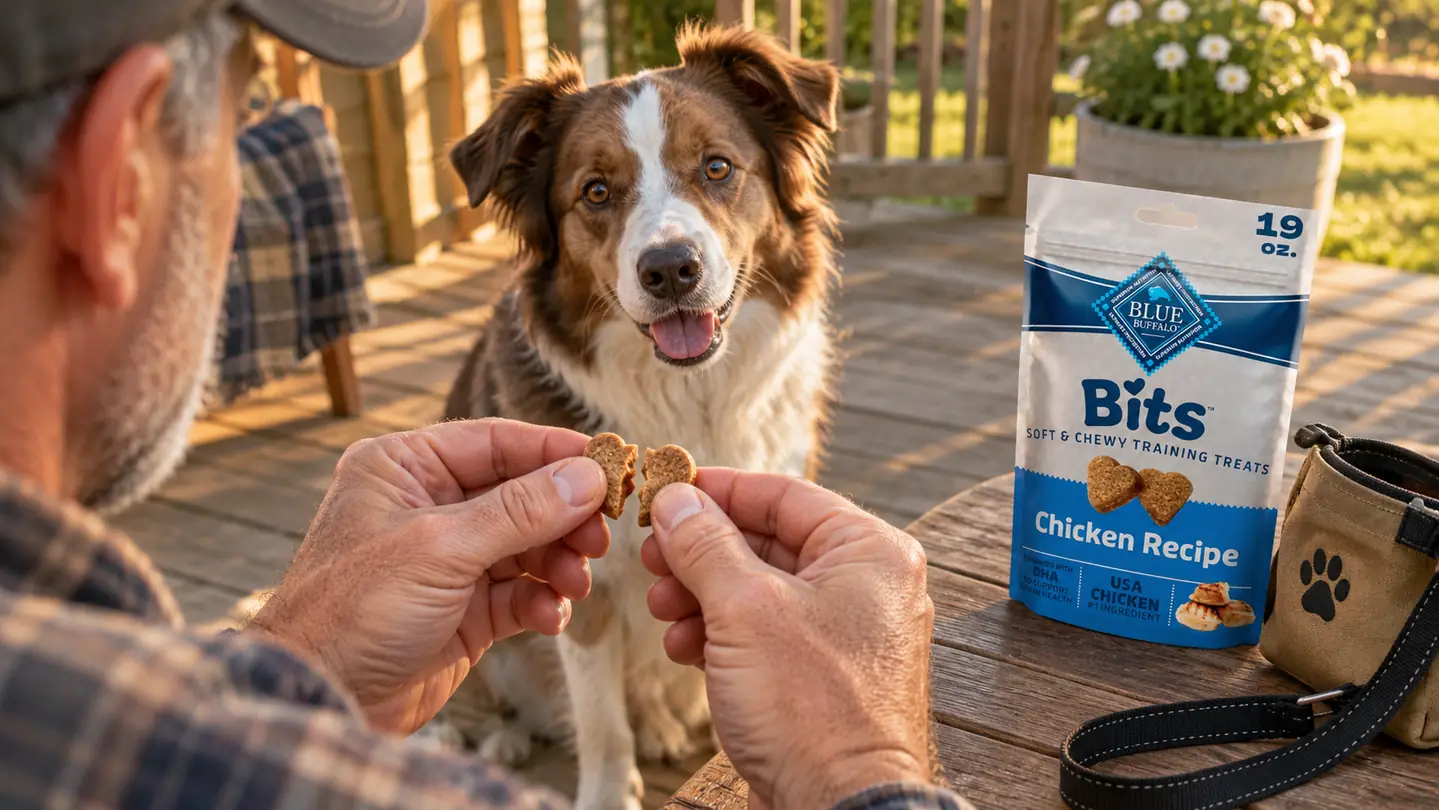
First, a 19-ounce bag is not a small amount of food. It weighs about 1.2 pounds and measures roughly 10 by 7 by 3 inches, so it takes up real shelf space, and when you are breaking each piece in half the way I do, it lasts a good while. I opened our first bag in early spring and finished it about five weeks later, training three short sessions a day plus a handful of rewards on the evening walk. That surprised me. I had braced for a week.
Second, the treats are soft and moist, which means they leave something behind. Your fingers smell like chicken after a session. If you wipe your hands on your jeans, your jeans smell like chicken. On the sidewalk that is fine. In the kitchen ten minutes before dinner it is less fine, and June has mentioned it more than once. I keep a damp washcloth by the back door now, which sounds fussy until you have done it the other way for a month.
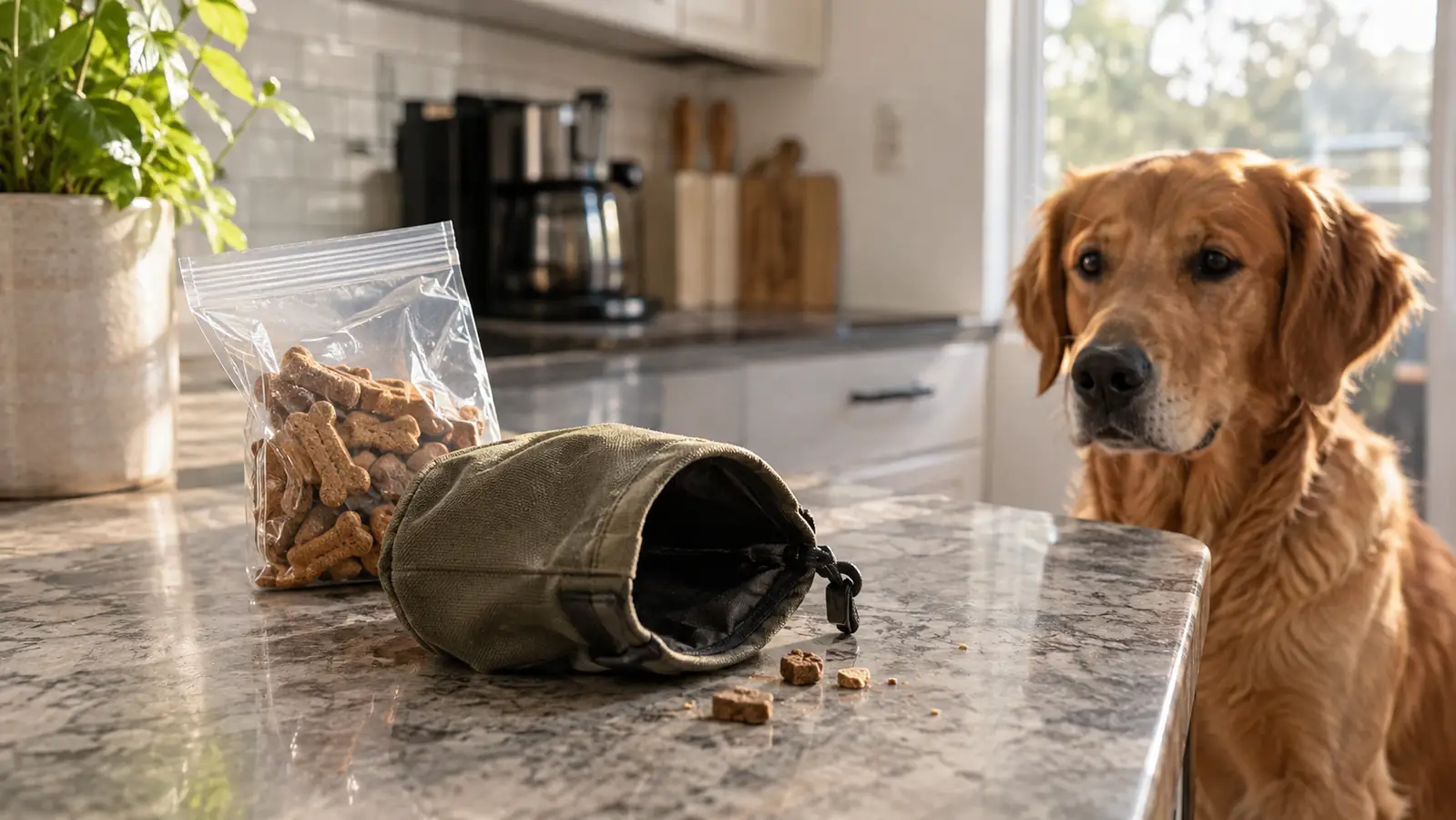
Third, and this is the one that actually caught me out: the bag is a bag. It is not a training pouch, it does not clip to a belt, and there is no way to hang it off your wrist while you juggle a leash, a clicker and a bag of dog waste. I ended up buying a cheap canvas pouch and pouring the day's treats into it each morning. That is not a knock on Blue Buffalo, it is just the thing nobody mentions, and it changes how you use the product day to day.
How I've Used It With Biscuit
Biscuit is a three-year-old Labrador mix we adopted from the county shelter when he was two, about 65 pounds, and when he came home he pulled like a freight train, jumped on anybody who came through the door, and treated the word come as a friendly suggestion. I am not a trainer. I am a retired mail carrier who walked a route for 28 years and met every kind of dog there is, and I took one group obedience class at the pet store with him, which is the extent of my education. What I do have is time and a routine.
Our pattern is three short sessions a day. One in the kitchen before his breakfast, one in the fenced backyard around midday, and one on the sidewalk in the evening when the neighborhood is quiet. Kitchen sessions are where new things get taught, because there are fewer distractions and I can stand still. Sidewalk sessions are where they get tested, and that is where I need a treat Biscuit will work for when a squirrel is thirty feet away. That is the real job of a training treat, and it is the reason I stopped buying the hard biscuits.
One session, as an example, because the numbers say more than the adjectives do. Tuesday evening, a little after six, we walked to the corner where the neighbor's beagle lives behind a chain-link fence. That corner is where Biscuit used to lose his mind. I stopped twenty feet short, asked for a sit, and stood there while the beagle barked. Four minutes, maybe five. Biscuit held the sit and took a piece of chicken each time he looked back at me instead of at the fence. Eleven pieces, so five and a half treats, since I break them in half. Two months ago that same corner was a shouting match and a sore shoulder. It is not finished, but it is progress, and it happened one small piece of chicken at a time.
For the harder work, like holding a sit while the mail truck goes past, I use these and nothing else. For easy repetitions, like a sit in the living room where he has never once failed, I use his regular kibble and he is perfectly content. Splitting it that way keeps the good stuff meaning something. When I was using the training treats for everything, including the easy reps, Biscuit started looking at me like I owed him something just for existing, and our sessions got sloppy.
Fifteen to twenty rewards in a four-minute session. A treat I can pinch in half is the difference between finishing that session and quitting early because I ran out.
The Soft Texture Cuts Both Ways
The upside is real. These break apart with a pinch, which means one treat becomes two or three, and a session that would have burned through twenty pieces burns through eight. For an older dog with worn teeth, or a puppy whose mouth is still small, soft is far easier to take than anything crunchy. Biscuit is a big dog and takes them in one motion, but the terrier two doors down has had most of his teeth out and he manages these without any trouble at all.
The downside is that soft and moist also means crumbly and moist. Shake the bag and you get crumbs in the bottom, and those crumbs turn into a paste by the end of the week. In warm weather they get tacky in your hand. Left in a hot car they are not the same treat when you come back, so do not do that. And if you are the sort of person who keeps a handful loose in a coat pocket, expect the coat pocket to need washing.
Here is the specific thing that happened, so you can judge whether it would bother you. I keep a light canvas jacket by the door for the evening walk. In June I left a dozen pieces loose in the right-hand pocket because I was in a hurry and did not want to fetch the pouch. By the time we got home they had warmed through and mashed into the lining, and the pocket still carries a faint smell of chicken. June noticed it before I did. Now that jacket gets three pieces and nothing more, and the pouch does the rest of the work.
None of that is a dealbreaker for me, and I want to be fair about it. Soft treats are soft on purpose. The trade is convenience in the moment for a little mess afterward, and every soft training treat I have tried has some version of that trade. What I would say is this: buy a small pouch, pour out what you need for the day, and leave the big bag on the shelf. It solves most of it in one move.
Reading the Panel Honestly
Real chicken is the first ingredient, which is the reason I picked these up in the first place and the reason I have kept buying them. The Blue Buffalo panel is short enough that I can read it out loud without stumbling. The bag states the treats are corn-free, soy-free and wheat-free, and it lists DHA, an omega-3 fatty acid, along with omega-3 and omega-6 from flaxseed for skin and coat. That is a decent label for something you are handing out twenty times a day, and it beats the store brand I was using, which listed a pile of things I could not pronounce and put meat somewhere near the bottom.
Before these, we went through two other bags. The first was a hard biscuit Biscuit would take and then drop on the kitchen floor, which tells you everything about how much he wanted it. The second was a soft treat from a brand I will not name, and it worked well enough outdoors, but the pieces were big, so I was cutting them with a paring knife on the counter like I was prepping vegetables. That is the honest reason I settled here. Right size to pinch, no knife required, chicken first on the panel.
Here is where I want to be careful, because I have read enough reviews that oversell a treat. These are treats. They do not replace a balanced diet, they do not fix a dull coat on their own, and a bag of them is not a training program. The label does not tell you how much DHA sits in a single piece, so I would not go around claiming these sharpen a dog's mind. What I will say is that a soft, chicken-first treat a dog will work for in a distracting place is worth having in the rotation, and that is the whole of my claim.
One more honest note. If your dog has a poultry sensitivity, this is a chicken recipe and it is not going to work for you. I have never had a problem with Biscuit on chicken, but I have friends whose dog itches all summer and they read every label twice. Read it. Ask your vet. Do not take my word for what your dog can eat.
What a 19-Ounce Bag Actually Gets You
Nineteen ounces, about 1.2 pounds, roughly 10 by 7 by 3 inches. Those numbers sound like nothing. In practice, breaking each piece in half as I do, that bag carried us through about five weeks of three sessions a day plus evening walk rewards. If you are training one dog at home, that is a reasonable stretch of time. If you are running a puppy class, or you have two dogs working at once, you will go through it much faster and you should plan for that.
I did the arithmetic once out of curiosity, and it changed how I hand them out. Nineteen ounces is about 1.2 pounds. My kitchen scale, which is not a laboratory instrument, put a good handful of pieces at a couple of ounces, and halving them stretches that further still. The point is not the exact count. The point is that you can be generous in a session and still get five weeks out of the bag, and that you should still cut the kibble back a little on the days you are generous. I keep a note on the fridge on heavy training days. It sounds ridiculous until your vet raises an eyebrow at the scale.
Storage matters more than you would think. Because the treats are moist, you want the bag closed and off the floor, and you want it somewhere that does not get hot. Mine lives in the cabinet above the microwave, which is the coolest spot in our kitchen and out of Biscuit's reach, mostly. The pantry by the back door was a mistake. He figured out how to nose that door open inside a week, and I came home to a bag with a hole in the corner and a very pleased Labrador.
The other thing a big bag does is tempt you to overfeed. Twenty rewards a session, three sessions a day, is a lot of extra food going into a 65-pound dog if you are not paying attention. I cut Biscuit's kibble back slightly on heavy training days and I weigh him at the vet's office every couple of months. If you are not going to do that arithmetic, buy a smaller bag and make it last. It is easier to stay honest with a small bag than a large one.
What I Liked
- Real chicken is the first ingredient, and the panel is corn-free, soy-free and wheat-free
- Soft and moist, so one piece breaks in half and a session goes twice as far
- Much easier for older dogs and puppies to chew than a hard biscuit
- DHA and flaxseed omega fatty acids listed, which is more than most training treats offer
- Biscuit will work for these on the sidewalk with a squirrel in plain sight
Where It Falls Short
- Crumbs and grease in a jacket pocket, and the bag is not a training pouch
- Gets tacky in warm weather and does not survive being left in a hot car
- Chicken recipe only, so it is no good for a dog with a poultry sensitivity
- A 19-ounce bag makes it easy to overfeed without noticing
- The label does not state how much DHA is in a piece, so the brain health line is softer than it sounds
Who This Is For
This bag makes sense for somebody training one dog at home, a few short sessions a day, who needs a reward the dog will actually work for when there are distractions around. It suits an older owner who wants something easy to break in half instead of wrestling with a hard biscuit in the cold. It suits a dog with worn teeth, or a young puppy still learning to chew. And it suits a household that already has a pouch and a routine, because that is where these really shine. If you are standing in your kitchen wondering whether to try them, and your dog is food motivated and has no poultry issue, I would say yes, buy a bag and see how the first two weeks go.
Who Should Skip It
Skip it if your dog has a poultry sensitivity, since this is a chicken recipe and there is no way around that. Skip it if you need a treat that can live in a coat pocket for a month, because these will not. Skip it if you are training several dogs at once or running a class, because a 19-ounce bag will not stretch far and you will be reordering constantly. And skip it if you are looking for something to pour into a bowl as food, because a treat is a treat and this is not a diet. If you fall into any of those, the honest answer is that a different bag will serve you better, and I would rather tell you that than sell you something that does not fit.
If your dog works for food, start with one bag and a cheap pouch
Three short sessions a day, pieces broken in half, and a dog that will hold a sit while the mail truck goes past. That is what this bag did for us. Check the current size and price before you order.
Amazon Check Today's Price on Amazon →