

Two years ago I drove home from the county shelter with a sixty-five pound Labrador mix in the back seat and a list in my head of everything I had forgotten to buy. Biscuit was three, had never lived in a house, and had no idea what a door was for. I stopped at the pet store on the way and came out with a collar, a leash, a bag of treats, and a hundred-count box of Glad for Pets Puppy Pads. The pads were an afterthought. I figured every new dog owner buys them the way every new homeowner buys a fire extinguisher: once, on the way out, and then never again.
I used that box plenty. Not for the reason I expected, either, and that is the reason I am writing this instead of just leaving a star rating and moving on. If you are shopping for pads because you have a puppy, or a small dog, or an older dog who cannot make it through the night anymore, this box does exactly what the package claims it does. If you are shopping because you just adopted a big adolescent rescue and you figure a pad will save your floors, I want to save you the two weeks I spent learning otherwise. Biscuit taught me which one of those I was, and he taught me at three in the morning with the kitchen light on.
The Quick Verdict
Six layers, an activated carbon sheet and folded edges that hold liquid in, 100 pads at 23 by 23 inches each. Genuinely good for puppies, small dogs, crate liners and truck seats. Not built for a sixty-five pound dog's full bladder, and no pad this size is.
Amazon Check Today's Price →For a Puppy, a Small Dog or a Crate Floor, This Is the Box
100 pads, 23 by 23 inches each, six layers with an activated carbon sheet that keeps a used pad from announcing itself to the whole house. Pull one out, spread it flat, done.
Amazon Check Today's Price on Amazon →How I've Actually Used Them for Two Years
Biscuit came out of that shelter with no manners to speak of. He pulled hard enough on the leash that my right shoulder ached for a week, he jumped on anybody who came up the walk, and the word come meant nothing to him. House training was lower on my list, because at three years old he was mostly reliable already, but we had accidents that first month. They happened at night, and they happened by the back door.
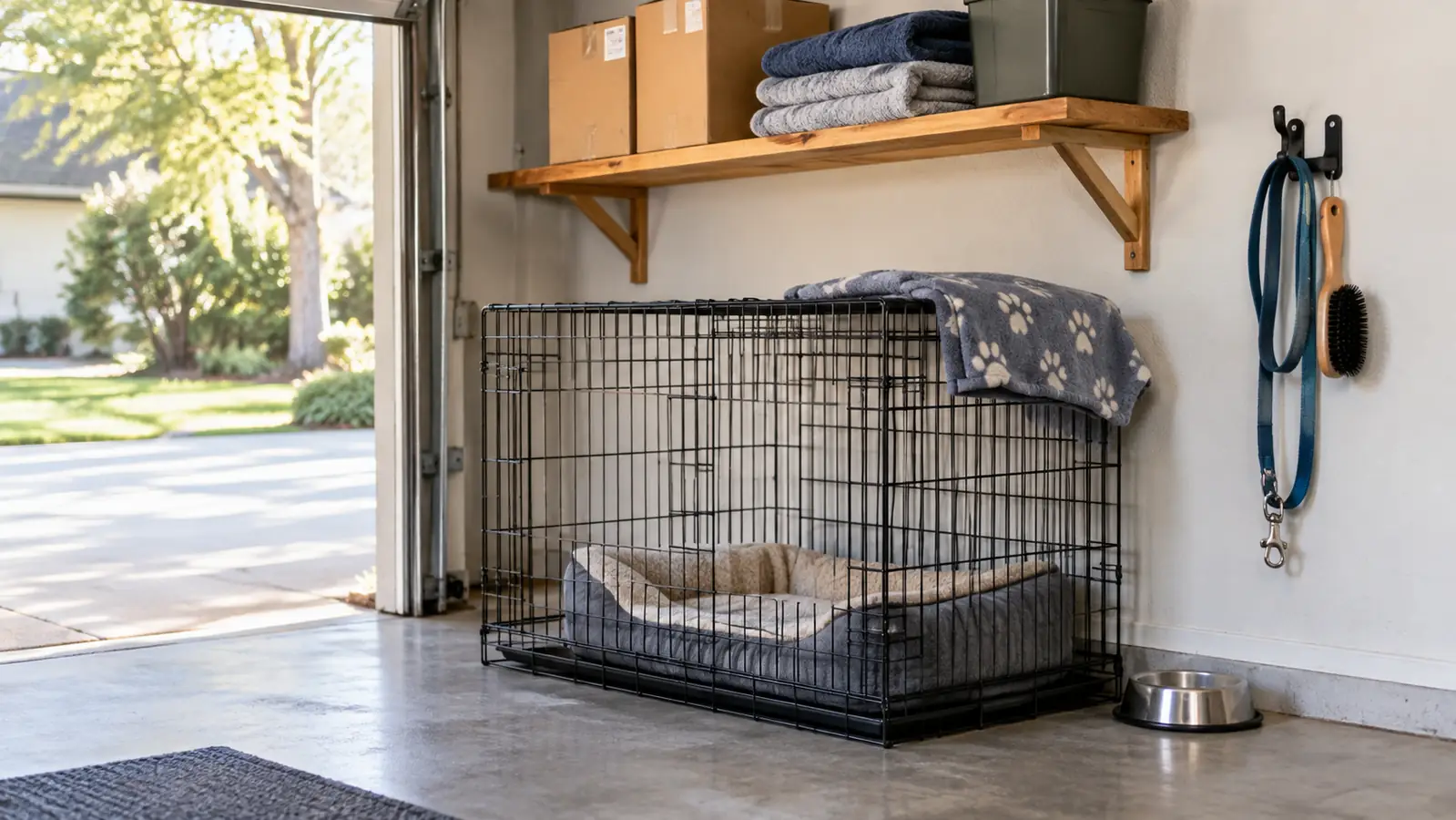
The first pads went down right there, on the tile by the door. Then I put one in the bottom of his crate. Then, after one long night of rain coming sideways under the sill, I laid a strip of them along the back hallway. Two years on, the box lives on a shelf in the garage and I pull from it for three jobs. One, the floor of the truck on the drive to the city park. Two, the bottom of the crate when we travel. Three, the doorway on nights when Biscuit would rather hold it than get his feet wet.
That is a short list, and I want to be fair about it: on all three of those jobs, these pads have done what I asked, every time. What they have not done is solve the problem I originally bought them for. The gap between the job on the package and the job in my house is the whole review.
What Nobody Tells You Before You Buy
Here is the thing that is not on the label. A puppy pad is sized for a puppy. Twenty-three inches square sounds generous in the listing and looks generous in your hand, and then a sixty-five pound dog uses it once and you understand the scale problem. A pad rated for four cups and a big dog's overnight bladder are two different units of measure. I put down two pads side by side after that first week, then three, and eventually I admitted I was building a floor out of paper.
The second thing nobody tells you is that pads work a little too well as a habit. A dog does not make a distinction between go here because I am learning and go here because it is convenient. Biscuit was already going outside when the pads showed up, so he never got confused. I have watched two neighbors leave pads down long past house training and then wonder why their eighteen month old dog still sneaks off to the bedroom rug. A pad is a bridge. If you never take the bridge down, you have not crossed anything. You have just built a floor covering.
The third thing is simpler and gets left out of most reviews. A hundred pads is a hundred pads. The box measures 7.09 by 12.6 by 11.22 inches and weighs 3.3 pounds, which is not enormous, but that box will sit on a shelf in your house for months. If your closets are already spoken for, that is a real cost, just not the kind you see printed on the side of the carton.
What Six Layers Actually Get You
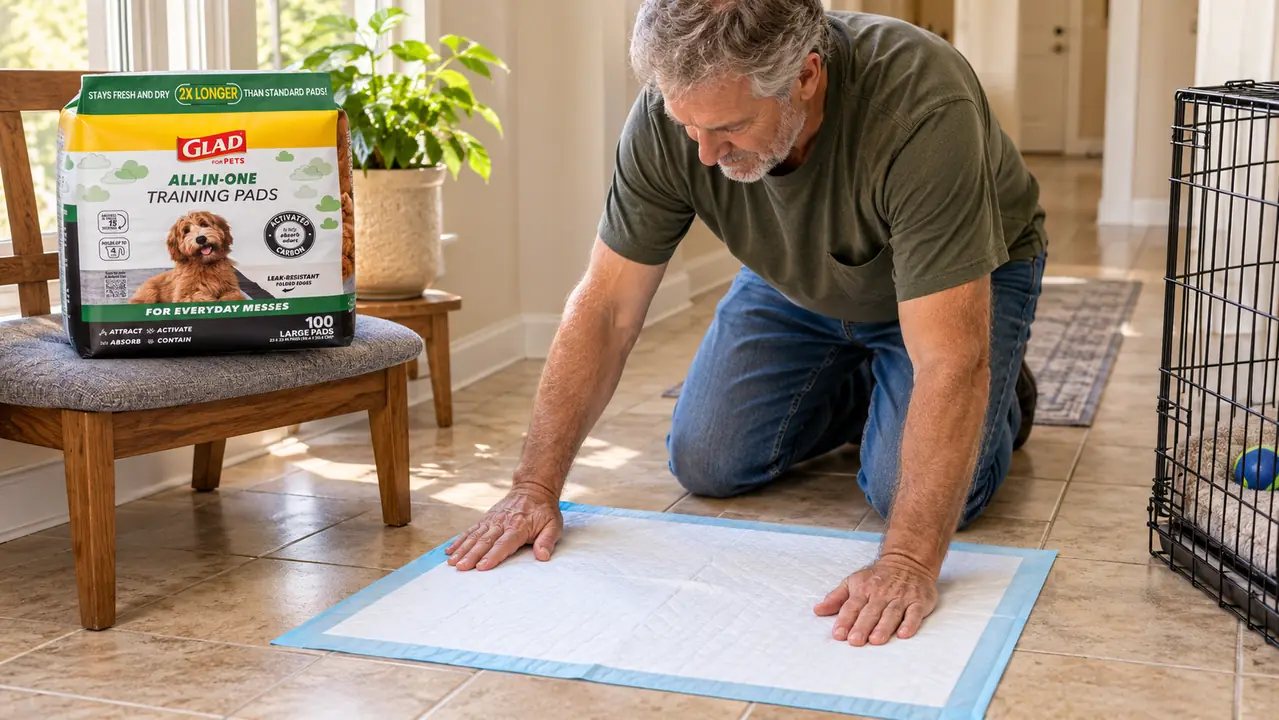
A Glad for Pets pad is not a sheet. It is a stack, and the stack is the reason these feel different in your hand than the thin pads at the discount store. From the top down you get a quilted top sheet, a carbon tissue layer, absorbent polymer, a cushion lining, and a PE film backing, with folded edges sealed around the whole perimeter. Six layers, each one doing a job.
The carbon tissue is the layer I care about most. Activated carbon is the same material that goes into furnace filters and into the boxes they ship fish in, and it works the same way here: it grabs odor rather than covering it up. In a house with a dog that is not a luxury. A used pad folded into the kitchen trash does not announce itself the way a plain pad does, and in a Missouri July that difference is the whole ballgame.
The polymer is the second thing worth understanding. Liquid hits it and turns to gel, so when you pick the pad up by one corner the mess does not slosh or drip on the way to the can. The listing says each pad holds up to four cups, and I have no reason to doubt the number. I also have no reason to test it, because four cups is a lot for a five pound puppy and not much at all for a dog the size of mine.
The quilted top sheet and the cushion lining are the quiet layers. The top sheet spreads liquid out instead of letting it pool in one spot, and the lining underneath keeps the pad from feeling like a wet bag when you lift it. The folded edges do the rest. A flat pad with a cut edge wicks liquid sideways to the border and lets it run off onto your floor. The folded edge holds the line.
Each pad is 23 by 23 inches and rated for up to four cups. A sixty-five pound dog is well past that. Buy the box for a puppy or a small dog, and use the rest in the crate and the truck.
Where They Fell Short
Size is the first complaint, and it is not Glad for Pets' fault. Twenty-three inches square is a puppy-sized target, and once the volume goes past what the pad can hold, the extra goes on your floor. One overnight accident ran past the edge and onto the concrete in about the time it took me to walk from the bedroom to the kitchen. Laid two side by side, the seam between them becomes the weak point, and liquid finds seams.
The habit problem is the second complaint and it is the bigger one. Leave pads down past house training and you are teaching a dog something you will have to unteach later. That is not the product's fault either, but it is a fair warning for anybody buying these as a permanent solution instead of a temporary one.
Third, one use only. The carbon layer cuts odor, it does not make the pad reusable. I have heard people talk about letting a pad dry out and putting it back down. Do not. It is paper and gel, and it will come apart on you the second time.
Fourth, and this is minor but real: the pad slides. On tile or hardwood, a dog who turns in a circle before lying down will push a dry pad out of position. A strip of tape or a shallow tray fixes it, but nobody mentions it and everybody notices it.
How I Use Them So They Actually Work
Put the pad where the dog already goes, not where you would prefer the dog to go. That sounds obvious and almost nobody does it. When I moved a pad to the back door instead of leaving it in the corner of the kitchen where Biscuit had already been having accidents, the accidents stopped happening in two places and started happening in one.
Change it the same day it is used, and take the dog out anyway. The pad is a backup, not a replacement. Every time I put a fresh one down I still walked Biscuit to the door and out into the yard, and I still gave him a treat when he went. Slow, repetitive, boring, and it is the only part of this that actually trains a dog.
One more thing that took me too long to learn: do not leave a pad where a bored dog can reach it. Biscuit went through a stretch where anything on the floor was fair game, and a shredded pad is a vet call waiting to happen. A crate liner is fine because he is not loose in there. Anything on an open floor gets picked up the moment I stop watching.
What I Liked
- Six layers including an activated carbon sheet, so a used pad does not stink up the room it is sitting in
- Folded edges hold liquid in instead of letting it wick out to the floor
- The polymer turns liquid to gel, so a full pad lifts clean without dripping across the kitchen
- 23 by 23 inches per pad, enough to line a crate bottom or cover a truck seat
- 100 to a box, so you are not reordering every couple of weeks
Where It Falls Short
- 23 by 23 inches is small for a big dog's full bladder, and no pad at this size solves that
- A 100 count box takes up real shelf space for months
- Pads left down past house training can teach a dog that indoors is acceptable
- One use only. The carbon layer reduces odor, it does not make the pad reusable
What I Compared Them To
Newspaper is free and it is what my father used. It also wicks straight through to the floor, it does nothing about odor, and it turns into a wet mess the second a dog steps in it. I tried it for four days. I am not recommending it.
Washable cloth pads are a bigger investment up front and you have to run the washing machine with something you would rather not think about. They are the better long-term answer for some households, especially if you have a small dog and a utility sink. For a travel bag and a truck floor, though, disposable wins, and it is not close.
The other option is no pads at all, just a door and a schedule, which is what a lot of trainers will tell you and what I would tell you too if your dog is healthy and your yard is fenced. For a puppy with a small bladder, a dog recovering from surgery, or a night when the rain is coming in sideways, a pad earns its shelf space. That is the honest case for keeping a box around, and it is the case I would make.
Who This Is For
This box is for the person with a real puppy, first of all. A puppy under about twenty pounds is exactly what a 23 by 23 inch pad is built for, and the carbon layer means one can sit in the corner of the kitchen for a day without running you out of the room. Put it where the puppy already goes, take them to it on a schedule, and reward them for using it. That is the whole method, and the pad is the easy part.
It is also for the person with a small adult dog in an apartment, an older dog who has started having accidents at night, or anybody who needs a crate liner that will not soak through on a four hour drive. And it is for the person who wants a backup plan for bad weather. I have used these for every one of those jobs and not one has soaked through the backing on me.
Who Should Skip It
Skip it if your dog is over about thirty-five pounds and you are buying these to catch a full bladder overnight. That is my situation, and it is why most of my original plan did not work. The arithmetic does not bend. A pad sized at 23 inches square and rated for four cups cannot absorb what a big dog puts out, and laying down two or three in a row gets wasteful and still leaves seams where the mess gets through. For a big dog, a washable belly band, a crate with a tray liner, or one more trip outside before bed will do more for you.
Skip it too if you want a permanent indoor bathroom spot. These are a training tool and a travel tool, not plumbing. And if all you need is a dozen for a car trip, the hundred count is a lot of shelf space for a small job. Buy small first, see how the pad does in your house, and come back for the big box if it earns it.
Two years in, this is still the box on my garage shelf. I have not found a pad that holds more, and I have stopped looking, because the limit was never the brand. It was my dog. Buy Glad for Pets for the puppy and the crate and the truck, and buy something else entirely for the overnight accidents from a sixty-five pound Lab mix. That is the honest version, and it is the one I would tell you over the fence.
Buy It for the Puppy, the Crate and the Truck. Not for the Big Dog's Overnight.
23 by 23 inches, six layers, an activated carbon sheet, 100 to a box. Two years in this is still the box on my shelf, and I still pull one out most weeks.
Amazon Check Today's Price on Amazon →