
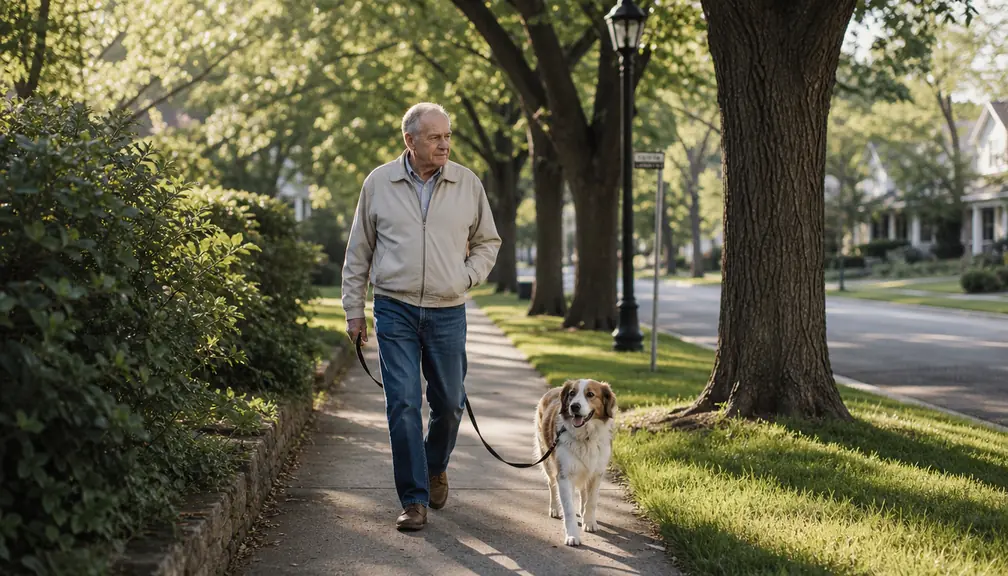
Biscuit came home from the county shelter at two years old and about 65 pounds, and he had exactly one walking speed: wide open. The first week he took me across a neighbor's lawn, around a mailbox, and into a hedge, all inside of forty feet. My right shoulder ached for three days. I spent 28 years walking a mail route here in Sedalia, so I am not easy to drag around. Biscuit dragged me anyway.
If you are reading this, you probably have your own version of that walk. Maybe you have a puppy who has never been taught, or a rescue like mine who learned on the street that pulling works. Here is what I wish someone had told me at the start. The pulling is not a personality flaw, and it is not a dog trying to be in charge. It is a habit that pays off. Every time the leash goes tight and the walk keeps moving, your dog learns that leaning forward gets him where he is going. Take away that payoff, give him an easier way to earn it, and almost every dog will take the easier way. The PetSafe Easy Walk is what made that possible for us, because it gave me a brake while I taught Biscuit the rest. It did not train my dog. It bought me enough control to do the training myself.
The brake pedal, not the driving lesson
The Easy Walk does not teach your dog anything. It just stops the pulling from working while you do the teaching. That is the entire job, and it is worth having.
Amazon Check Today's Price on Amazon →Step 1: Fit it properly, before you clip a leash to it
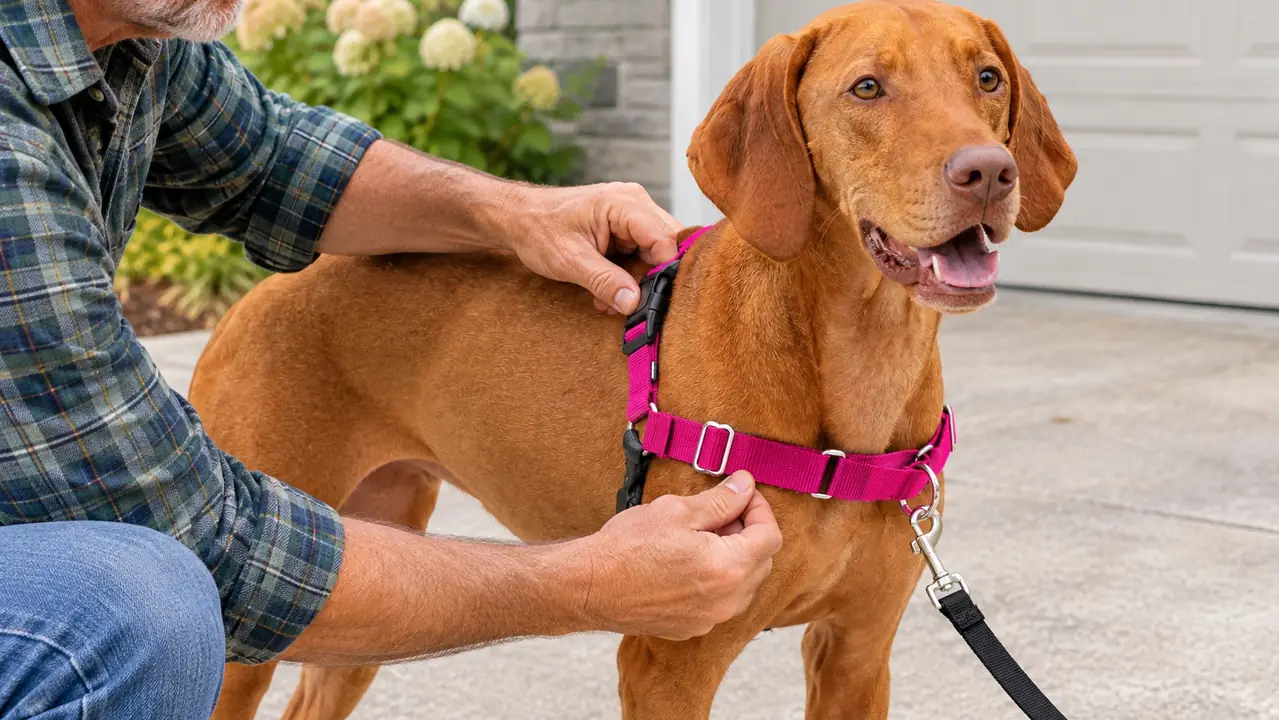
A no-pull harness that fits wrong pulls worse than a plain collar, and it rubs. Before you clip anything to it, put it on a calm dog who is standing still, and check three things. The PetSafe Easy Walk in Medium is built for medium breeds, the whole harness weighs about 6.7 ounces, and it is nylon with a buckle closure, so most dogs forget it is on within a few minutes. The belly strap is a different color from the shoulder straps, which sounds like a small thing and is not. It lets you tell at a glance which piece goes where, which saves you from buckling the thing upside down at six in the morning.
The fit rules I use are simple. You should be able to slide two fingers under every strap without fighting it. The belly strap sits behind the front legs against the ribs, not up in the armpits and never across the throat. The martingale loop across the chest should lie snug when the leash is slack and tighten only enough to turn the dog, not to squeeze him. If your dog can back out of it, it is too loose. If the straps leave pink lines after ten minutes, it is too tight.
Then walk him once around the block and check it again. Nylon settles, and a harness that fit in the driveway is often a notch off after a quarter mile. I check Biscuit's behind the front legs every time we go out, because that is where he rubs. PetSafe backs the harness with a one year warranty, which tells you they expect it to hold up to daily use. Ours has, through three years of walks and one very muddy spring.
Step 2: Put it on the same way, in the same order, every time
Dogs are excellent at learning routines, and they are even better at learning which human is the soft touch. In our house the order never changes. Harness over the head, belly strap snapped, one small treat, then the leash, then the door. Same order every walk, whether it is me or my wife June. If one person buckles the harness and lets the dog barge out the door while the other person makes him sit first, you will get a dog who barges for one of you and sits for the other. He is not confused. He is being efficient.
The doorway is the first place pulling gets practiced, so make it the first place it stops paying. Ask for a sit. Reach for the door. If he gets up, your hand comes off the handle and you wait. Door opens, he surges, door closes. It takes most dogs about a week to work out that the door only opens for a dog with four feet on the floor, and once they do, that lesson carries to every door you own, including the ones at the vet's office.
One more thing about the harness itself. The PetSafe Easy Walk is walking gear, not everyday wear. I take it off when we come inside, partly so it stays clean and partly so the sight of it means something. When Biscuit sees that harness come off the hook now, he is at the door before I am, and that is a dog who is already thinking about the walk instead of fighting me about it.
Step 3: Decide what a tight leash means before you leave the driveway
Pick a rule and never bend it. Mine is that a tight leash means the walk stops. Not a jerk, not a holler, not a pop on the leash. Just stop, plant your feet, and wait. The first time, Biscuit hit the end of the leash and stood there looking back at me like I had lost my mind. The second time he sat down on his own. The third time he checked in before the leash ever got tight, and I nearly cried in the middle of the street.
You also have to reward the position you want, not the lunge you are trying to stop. I keep a pocket of small treats on my left side and I pay him for being at my knee. Not for coming back after a big pull. For being there in the first place, before anything went wrong. That is the whole difference between a dog who learns to stop pulling and a dog who learns to pull and then hurry back for a treat.
Expect the first week to be slow and a little ridiculous. Biscuit's first session covered about forty feet in nine minutes. Our neighbor Darlene watched the whole thing from her porch and asked if the dog was sick. That is what the beginning looks like, and it is not a sign the method is failing. It is the method. Count the check-ins, not the distance.
Six weeks in, the mile that used to take us forty minutes takes twenty two, and I come home with both shoulders level.
Step 4: Be a tree first, then use the turn
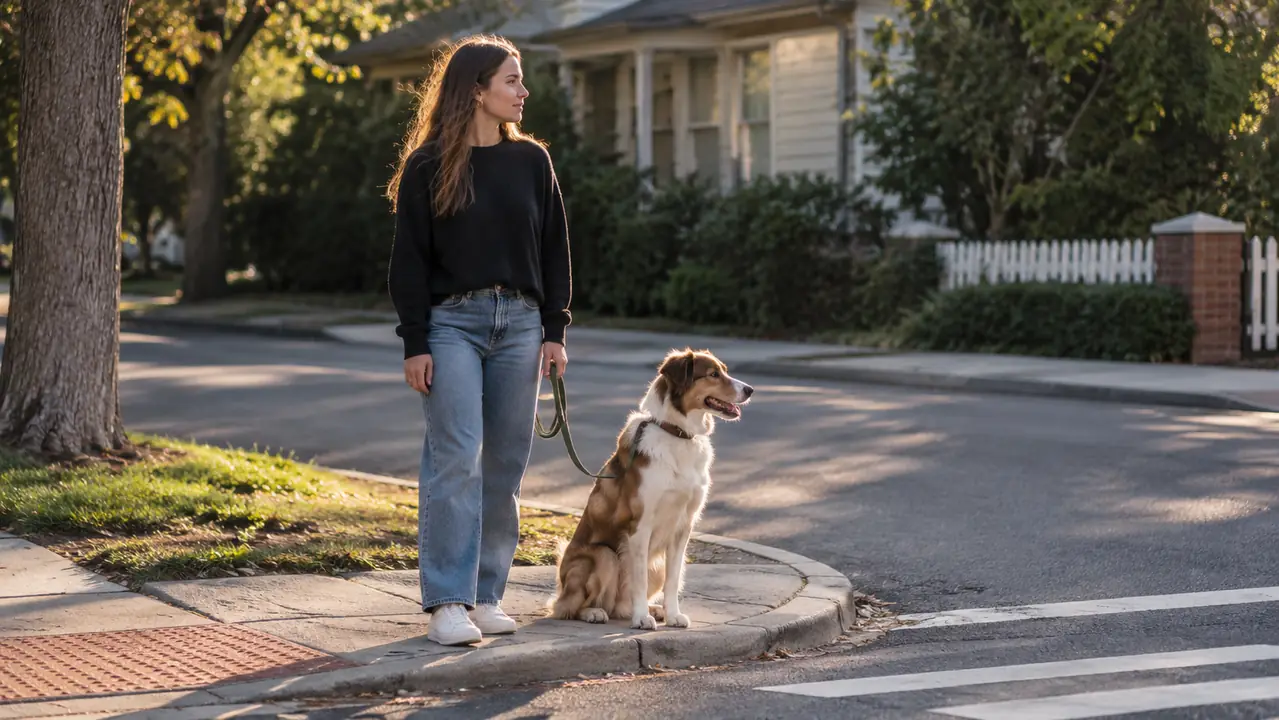
There are two responses worth having in your pocket, and between them they cover most of what a walk throws at you. The first is being a tree. Feet planted, leash hand at your belt, no talking, no tugging, wait him out. The second is the turn. When he keeps leaning and the tree is not working, turn and walk the other way for a few steps, then turn back and carry on. You are not punishing him. You are showing him that the direction he chose is not the direction the walk goes.
This is where the PetSafe Easy Walk does its job. With a flat collar or one of the harnesses that clips on the back, a leaning dog just leans harder, and you become the anchor. With the martingale loop across the chest, the harder he leans, the more the loop brings him around to face you. He is not getting hurt and he is not getting choked. He is getting turned. That is the whole reason I bought it, and it is the reason I still use it three years later.
What I do not do is yank. I used a collar that way years ago with a different dog and it bought me a dog who walked with his head down and his ears back the rest of his life. A no-pull harness lets you be lazy about force, because you do not need any. The tool does the steering and you keep both hands soft and one pocket full of chicken.
Step 5: Add distance and distraction in that order, never both at once
Once Biscuit could walk our own block with a slack leash, I started changing one thing at a time. A different block first, quiet street, no other dogs. Then the same block with a parked garbage truck, which he had strong opinions about. Then a dog across the street. Then the city park on a Saturday morning with kids and strollers and a whole flock of geese. New distance and new distraction on the same day is where most people lose a month of progress and blame the harness.
Three short sessions a day beat one long one, and I mean eight to ten minutes each. End every session on something he did well, even if that means turning for home while he is still behaving. If he regresses two days running, you moved too fast, and the fix is to drop back one step for a week. That is not starting over. That is how training actually works, and it is how it works for people too.
Where we are now, honestly. Biscuit walks a slack leash on our neighborhood route about ninety percent of the time. A squirrel will still get him, and so will a loose dog on the far side of the street. I handle those with distance and a treat in front of his nose, and I do not pretend he is cured, because he is not. He is a three year old Lab mix who was living on the street at two. Ninety percent is a good life for both of us, and it beats the hedge.
The one thing the Easy Walk will not do is work by itself. Hang it on the hook and the pulling comes right back, because the dog has not unlearned anything, he has just stopped being rewarded for it. The harness buys you the calm moment. What you do inside that moment is the training, and that part is on you.
What Else Helps
The harness is one piece of this and these are the others, roughly in the order I would fix them. First, use a plain six foot leash. A retractable leash teaches a dog that the walk happens at the end of a taut line, which is the exact habit you are trying to break. I keep meaning to throw ours away and I keep forgetting, so consider this me telling you what I should do.
Second, pay better than the environment does. Kibble will not beat a squirrel. Small pieces of real chicken will, and you will pay out less of it than you think, because you are paying for a position rather than bribing a dog down off a mailbox. Third, walk him tired. Ten minutes of fetch in the fenced backyard before we leave means Biscuit has far less to spend on the leash, and the whole walk goes easier for it.
Fourth, have the vet check him over if the pulling started suddenly or got worse out of nowhere. A dog with a sore back, or long nails on a slick floor, moves differently, and no harness on earth fixes that. Fifth, get everyone in the house on the same rule, including the grandchildren who visit. June and I settled this early and it saved us months of arguing with an animal who cannot read a calendar.
Sixth, a group obedience class is worth the money for most people. We took one at the pet store in town. It did not teach me a single thing about harnesses, but it taught Biscuit how to hold himself together in a room full of other dogs, which is a different skill from walking past one on a sidewalk, and it got us both out of the house on a Tuesday. If you are on the fence about a class, the fence is the wrong place to be.
Last, give it six honest weeks before you decide it is not working. I am 61 and I have started and stopped plenty of things that take longer than a weekend. What made this one stick was that the harness removed the daily failure. Before it, every walk was a losing argument. After it, most walks were boring, and boring is exactly what you are hoping for.
Start with the fit, not the fight
Measure your dog's chest behind the front legs before you order, check the straps again after the first block, and keep a pocket of chicken handy. The first two weeks are the hard ones.
Amazon Check Today's Price on Amazon →