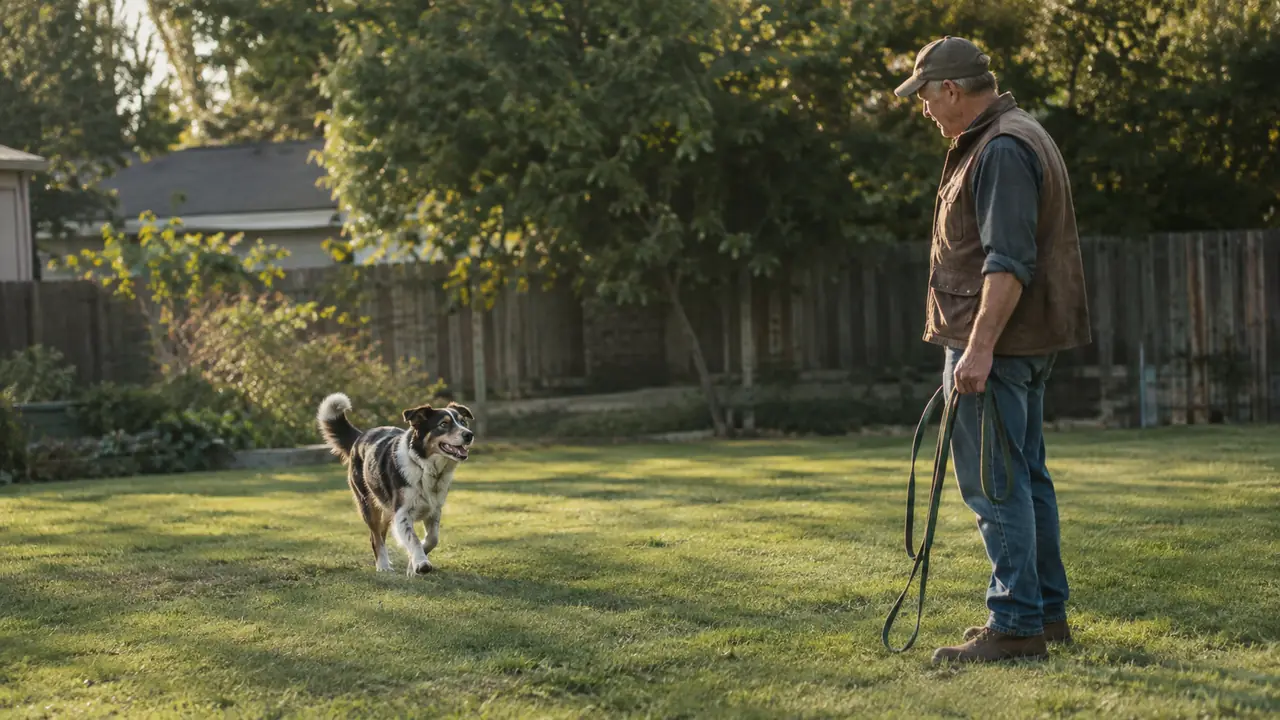
Biscuit came home from the county shelter at two years old, sixty-five pounds of Labrador mix, and he did not know that the word come was supposed to mean anything at all. The first week I let him drag a six-foot leash around the backyard and told myself we were training. We were not. The first time I dropped that leash at the city park, he got forty yards out, found something dead and fascinating in the grass, and looked back at me the way you look at a stranger yelling numbers in a parking lot.
Here is what I had wrong for about a month. A six-foot leash can teach a dog to walk politely beside you. It cannot teach him to come from a distance, because there is no distance. And the retractable leash I had been using taught him something else entirely: that a steady pull is just how the world feels. So I bought a long line. The one I settled on is the Hi Kiss training lead, a fifteen-foot nylon lead three quarters of an inch wide, with a swivel bolt snap on the end and a listed weight of 1.76 ounces. Fifteen feet is enough rope for a dog to make a real decision, and light enough that it does not drag him around while he makes it.
Fifteen feet of rope that turned recall into something we could actually practice
The Hi Kiss training lead is a plain nylon long line: fifteen feet long, three quarters of an inch wide, a swivel bolt snap on the end, listed at 1.76 ounces. Nothing to jam and nothing to adjust. It is the piece of gear that let me work on come at a real distance long before I trusted Biscuit off leash anywhere.
Amazon Check Today's Price on Amazon →Step 1: Get the Gear and the Treats Right Before You Say a Word
You need four things and no more. A fifteen-foot line, a flat collar or a harness the dog already wears comfortably, a handful of treats cut to about the size of a pea, and a pocket that closes. That is the whole kit. The Hi Kiss lead has a snap closure on one end, and the rest of it is yours to manage, so coil the slack in loose loops and keep your hand open. Do not wrap the line around your wrist or your fingers. If a sixty-five pound dog hits the end of that rope while it is wrapped around your hand, you will remember it for a month.
The treats matter more than people think. Kibble from his dinner bowl is not a reward, it is a ration. I use small pieces of cooked chicken or a soft store-bought training treat, and I only use those for recall work. If Biscuit gets them for sitting on the couch, they stop being worth crossing a yard for. Keep the whole session to three or four minutes and run two or three of those a day. Short and boring beats long and memorable, in the good way.
Pick a spot with almost nothing going on. My backyard at seven in the morning, before the neighbor lets her dogs out, is about as quiet as it gets around here. No kids, no squirrels if I can help it, no food smells from the kitchen. You are building a habit, and habits take hold faster when there is nothing competing for the dog's attention.
Step 2: Teach the Word Before You Ask Him for Anything
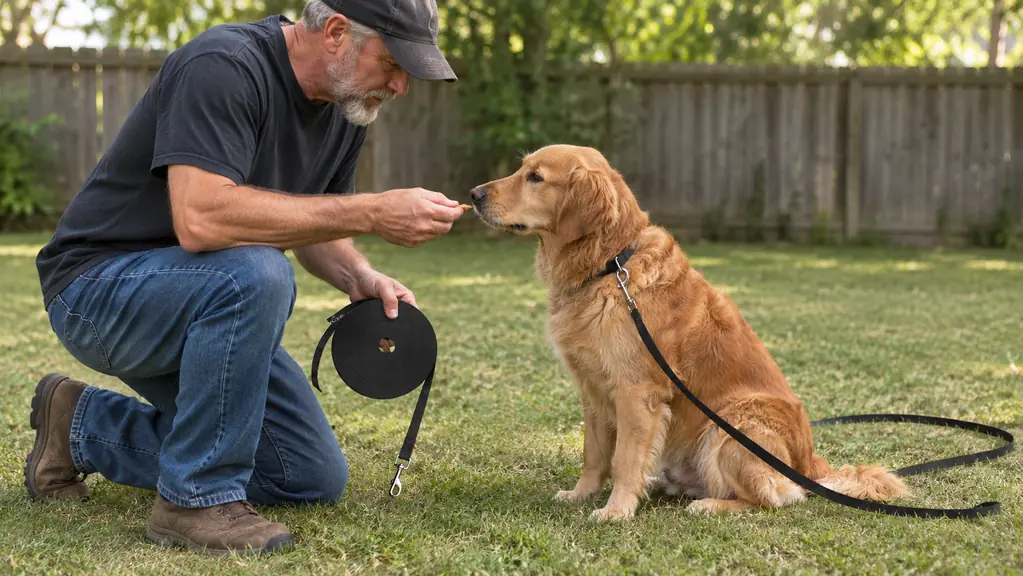
Say his name once. When his head swings toward you, say come once, then get the treat to him within about a second. That is the whole exercise, and it is the most important one in this article. You are not asking him to travel anywhere yet. You are teaching him that a particular sound predicts something good arriving at his mouth.
Do this eight or ten times in a session and then stop. If he does not turn his head, you are too far away, there is too much going on, or the treat is not worth it. Move closer, go quieter, or upgrade the food. What you never do is say the word twice. Come is not come come come. Every time you repeat it, you teach him that the first one is optional, and optional words are the reason half the dogs in this country have no recall.
You should also never say it when you cannot follow through. Not from the front door when he is already halfway to the fence. Not when you are late for an appointment. If the odds are bad, go get him instead of spending the word on a coin flip. In the first week, turning his head in your direction is a win. I celebrated a lot of head turns in my kitchen, and June thought I had lost my mind, but it worked.
Step 3: Add Distance Inside the Fence
Now the line comes out. Snap it on and let the last few feet rest on the ground beside you. Start with him six feet away and you backing up as you call, not leaning forward, not crouching with your arms out. Backing away is an invitation. Chasing him is a game you will lose, and leaning over him is a thing a lot of dogs read as a reason to stay put. Say the word once and let the rope do the rest.
Deliver the treat down low, between his front paws, not up in your hand like a fishing lure. If you hold it out at chest height, he learns to stop three feet short and stare at your fingers. You want him to arrive at your feet and stay there while he chews. Then give him a release word, something like okay or free, and let him go sniff. The release is part of the reward. A dog that gets called and then held by the collar every single time will start doing the math on the whole arrangement.
Work your way out to ten feet and then the full fifteen over a week or two. Quit while you are ahead. If he comes three times out of five, that is your session, stop and put the gear away. If he comes five out of five, you can make it harder next time. Never end on the one where he ignored you, if you can help it, because you want the last thing in his head to be the win.
A dog that gets corrected for coming back learns one thing: coming back is a gamble. A dog that gets a piece of chicken for coming back learns the opposite, and he learns it faster.
Step 4: Take the Long Line Out of the Yard
This is the step that separates a backyard dog from a dog you can trust. Snap the Hi Kiss lead on at the park and let it drag. Give him twelve or fifteen feet of room and let him get his nose down. Then say his name, wait for the head to turn, say come once, and stand still. He has fifteen feet of nylon to cover and no fence to stop him, so this is the first honest test you have given him.
Sometimes he will blow you off. When that happens, do not repeat the word and do not get loud. Walk toward him calmly, gather the line hand over hand as you go, and when you reach him, just take up the slack and reset with something easier. No lecture. What you must never do is use the line to yank him toward you or scold him once he finally arrives. In his head, the sequence was: I came, and then something bad happened. You only have to make that mistake twice to undo a month of work.
Keep the line on for months, not days. I still bring ours to the park and Biscuit is three years old and has come a long way. The line is not a punishment, it is a seatbelt. It keeps a good decision from turning into a bad outcome while he is still learning to make good decisions, and it keeps me calm enough to reward the ones he gets right.
Step 5: Proof It Against Real Distractions and Give Him a Reason to Arrive
Here is the mistake almost everybody makes. We call the dog only when the fun is over. Come inside. Come get in the car. Come away from the park. If every recall ends the good part, the dog learns to slow down, drift, and take the long way. So call him often, reward him, and then send him back out to play. Ten recalls at the park that all end with a treat and a release are worth more than a hundred that end with a car door.
Bring a second person when you can. June stands twenty feet away with her own treats and we send Biscuit back and forth between us like a slow, hairy ping pong ball. He gets a reward at each end and the game itself becomes the fun. This is also how you proof against people, because a dog that only comes for the one person who feeds him is a dog with a narrow set of skills.
Expect weeks, not days. Realistically you are looking at a month of short daily sessions before come is dependable in the backyard and several months before you trust it around a squirrel. Some dogs are quicker, some are slower, and none of it is a verdict on the dog. Keep the line on when the stakes are high, keep the treats in your pocket, and treat every recall as a favor he is doing you rather than a command he owes you. That attitude shows up in your voice, and the dog hears it.
What Else Helps
Upgrade the food and shrink the pieces. A dog that will not cross a yard for kibble will cross it for a sliver of hot dog. Small pieces also mean you can pay him ten times in a three-minute session without turning his stomach or his waistline into a problem. Keep the good treats in a pocket that only gets opened for training, so the smell of that pocket starts doing some of the work for you.
Watch what your dog is wearing. Biscuit pulls, so we use a harness for anything where the line might come tight, and a flat collar for short backyard work. Whatever you use, check the snap on the leash before every session. Fifteen feet of nylon under a running dog is real force, and a snap that has started to open is a snap that will eventually let go. Look at the nylon too, especially near the snap, for frays or stiff spots.
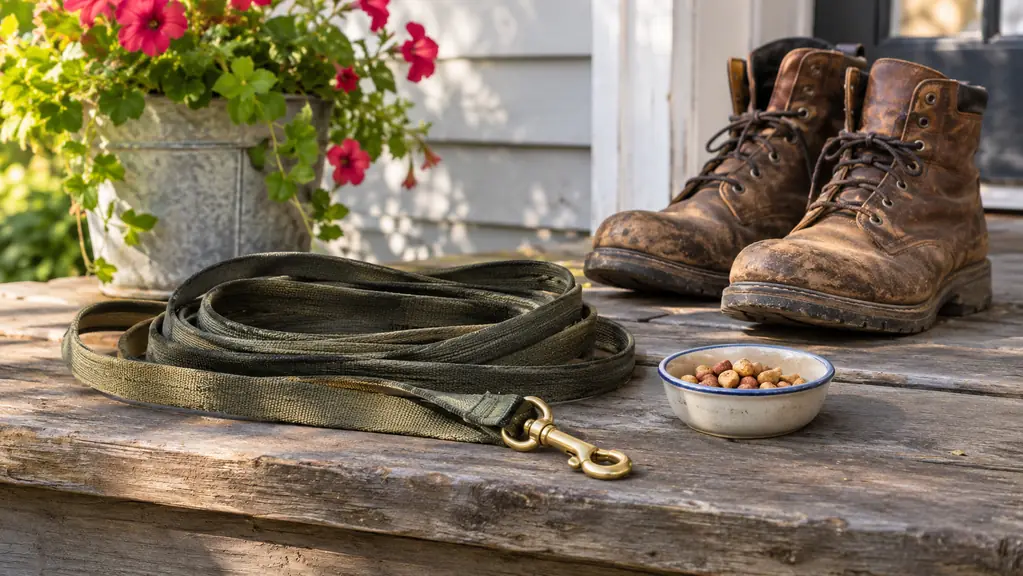
Store the line loose, not knotted in a bucket. Rinse it if it gets wet or muddy and let it dry hanging over the porch rail. A tangled, mildewed long line is the reason people quit using long lines. Ours lives on a hook by the back door, coiled, with the snap hanging free so I can grab it with one hand while holding a leash and a bag of treats in the other.
Fifteen feet, one snap, and a dog who checks in on his own
If your dog has no recall because he has never had room to practice one, this is the cheapest fix in dog training. The Hi Kiss training lead is a fifteen-foot nylon long line, three quarters of an inch wide, with a swivel bolt snap and a listed weight of 1.76 ounces. Start in the yard this week.
Amazon See the Hi Kiss Training Lead on Amazon →