
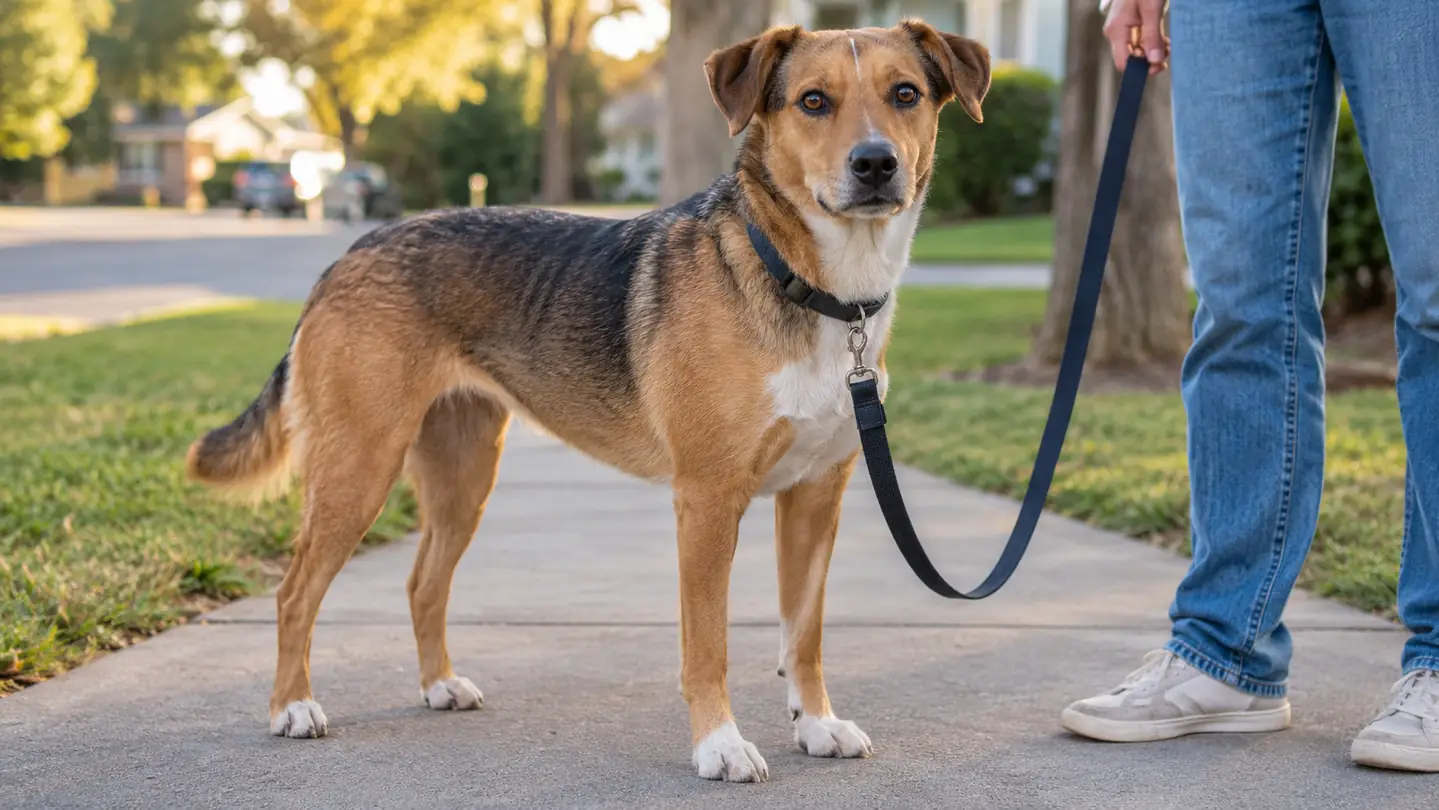
I bought the PetSafe Easy Walk for a reason I am not proud of. It was a Tuesday morning in October, Biscuit spotted a squirrel across the street, and I did a half jog down the sidewalk behind a 65 pound Labrador mix with a coffee cup in my free hand. I am 61 years old. I walked a mail route for 28 years and never once got dragged off my feet by somebody else's dog. My own dog turned out to be a different story. So I did what most folks do. I read about forty reviews, got good and confused, and bought the harness with the most of them, the PetSafe Easy Walk No Pull Dog Harness. This is what I found after months of daily walks, including the parts the product listing does not say out loud.
I am not a trainer and I am not going to pretend to be one. I took one group obedience class with Biscuit at the pet store, and everything else we have done is at home, a few short sessions a day, with treats and more patience than I knew I had. So take this as the view from the sidewalk. It is one man, one rescue dog, and a real need to make the morning walk pleasant again without yanking on the poor animal's neck.
The Quick Verdict
It genuinely cuts down pulling on most strong dogs, but only when it is fitted right and paired with reward based training. It is a steering tool, not a cure.
Amazon Check Today's Price →The harness that got me walking Biscuit one handed again
The Martingale loop sits across the shoulders and eases the pressure the moment your dog stops pulling. Quick snap shoulder straps, a one year manufacturer warranty, and about 6.7 ounces sitting on the dog.
Amazon Check Today's Price on Amazon →How I've Used It
Biscuit came to us from the county shelter at age 2. He is 3 now, about 65 pounds, and when we got him he pulled on everything. He came with a back clip harness that a volunteer handed us at the shelter door, and it did exactly what a back clip harness does with a strong dog. It let him lean into it and tow me like a barge. I tried a slip lead for about a week. That was a mistake and I knew it, because watching him cough at the end of it made me feel about two inches tall.
The PetSafe Easy Walk changed the direction of the conversation. The leash attaches at the chest instead of across the back, so when Biscuit surges forward the harness turns him back toward me instead of letting him lean into the pull. The first week he walked like a dog wearing a raincoat, all sideways looks and short choppy steps. By the second week the walking was straighter. By the end of the month my shoulder stopped aching, and that is the honest measure of whether a piece of gear is working.
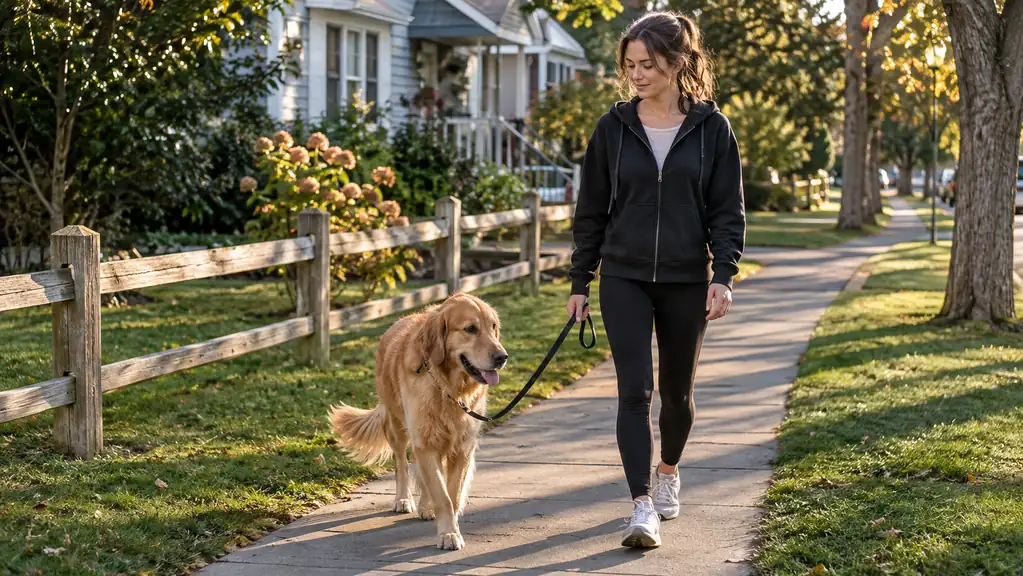
We use it every day on the neighborhood loop, and it goes with us on weekend trips to the park in town. I keep a treat pouch on my belt and I still reward him for walking at my side, because the harness is not doing the training. It is making the training possible. There is a difference and it matters more than any single feature on the box.
What Nobody Tells You About the First Two Weeks
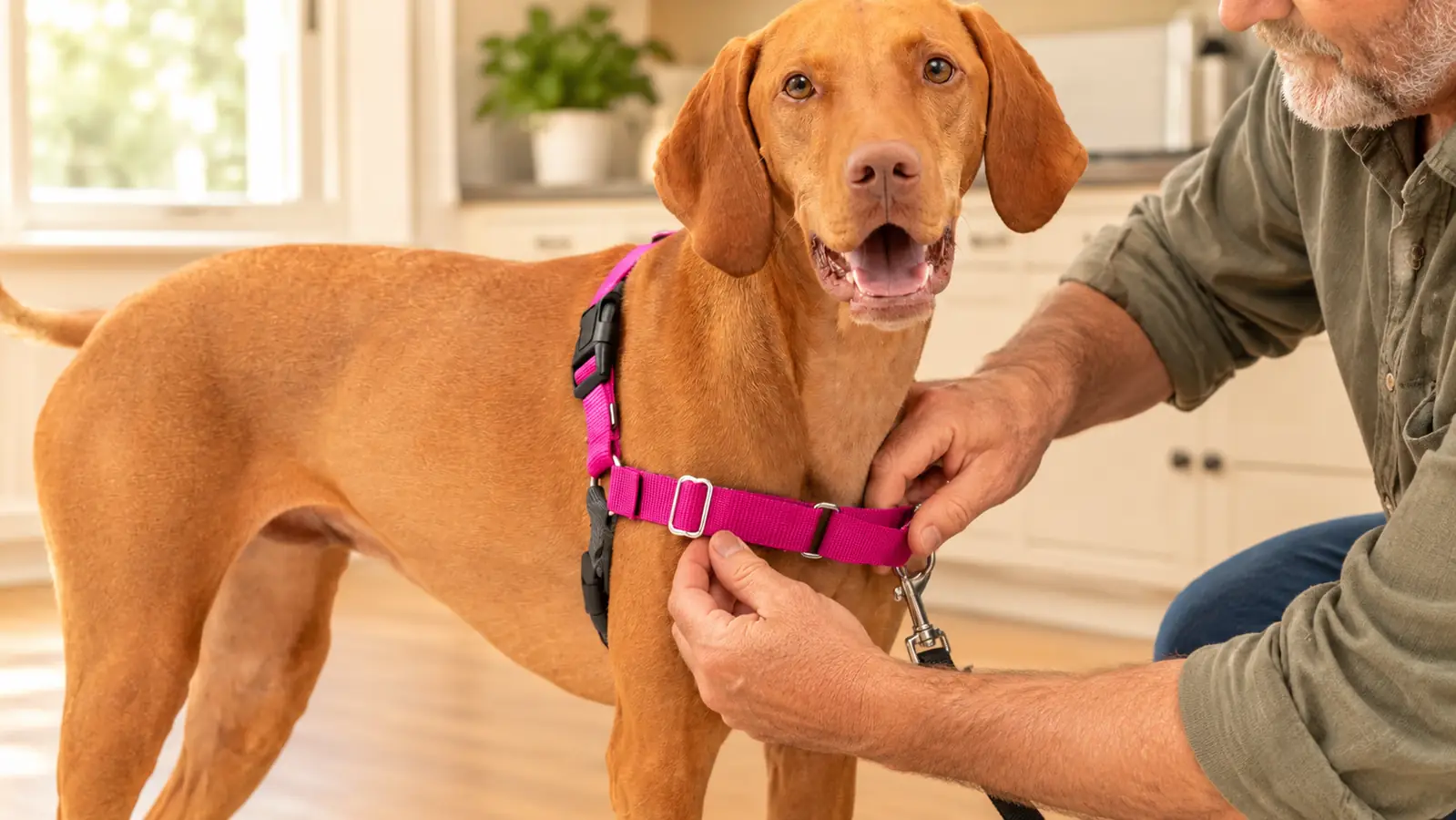
Here is the part reviews usually skip. The harness does not arrive with your dog already trained. What it does is make pulling feel pointless. The martingale loop across the shoulders puts gradual pressure there when your dog pulls, and that pressure eases as soon as he stops. Biscuit figured that out in about nine days. Nine days of me standing still on the sidewalk like a fool while he tested the math. Every time he hit the end of the leash I stopped, waited, and when he turned back toward me we went forward again.
The other thing nobody mentions is the fit. A loose harness on a strong dog is worse than no harness, because the whole thing slides around and the pressure stops being gradual and starts being a surprise. My first attempt was too loose across the chest. Biscuit walked out of it in the driveway and stood in the middle of the street looking at me like I had failed a test. After I snugged it up the way the fitting guide describes, two fingers of room and no more, it stayed put.
And expect some fussing. Biscuit scratched at the straps for the first few days and did a dramatic flopping sit at one point that I wish I had on video. He got over it. I also fed him a few treats while I was putting the harness on and taking it off, which I think did more for our relationship than any single piece of equipment. Now he sticks his head toward it when I pick it up.
The harness did not teach Biscuit not to pull. It taught him that pulling does not get him anywhere. The treats taught him what to do instead.
The Martingale Loop, Explained Without the Jargon
The martingale loop is the piece people ask about, and it is not complicated once you see it work. It is a loop of nylon across the front and shoulders that tightens a little when your dog pulls against the leash, and relaxes the second he stops. It is not a choke collar and it does not tighten around the throat. The pressure lands across the chest and shoulders, which is a whole lot sturdier real estate than a windpipe.
What I noticed in practice is that the tightening does the correcting, not me. I do not have to yank, and honestly I should not be yanking at 61 years old with a 65 pound dog. When Biscuit hits the end of the leash now, he feels a little squeeze across the shoulders, he slows down, and the squeeze goes away. He has learned that a slack leash is the comfortable state. That is exactly the lesson I wanted him to learn, and I would rather he learn it from a strap than from me jerking on his neck.
The limitation, and it is real, is that a determined dog can still get to the end of it. If a cat crosses the road, Biscuit is going to surge. The harness turns him and slows him, but it does not turn him into a statue. On those occasions I plant my feet, hold the leash with both hands, and we wait it out. If that happens to you, it is not a defective harness. It is a dog being a dog, and it is a sign that more training is due, not more hardware.
Fitting It Right Is Most of the Battle
Fitting is where I would spend your first twenty minutes. The quick snap shoulder straps make it easy to get on and off, and the belly strap is a different color from the rest of the harness, which sounds like a small thing until you are trying to work out which strap goes where at six in the morning. There is a buckle closure at the side. Once you have the straps set the first time, put it on and take it off over the head without touching the adjustments again.
Measure the chest before you buy, not the neck and not the weight. The listing puts the medium at a 9.5 by 1.38 by 5.25 inch footprint and about 6.7 ounces of nylon, which is light enough that Biscuit forgot he had it on by the second week. The size chart recommends it for medium breeds, and if your dog sits on the line between two sizes, and it seems like everybody's dog does, the usual advice is to size up and adjust down. I bought medium for a 65 pound lab mix and the fit has been right.
Check the fit again after a few walks. Nylon straps stretch and settle, and a harness that fit on day one can be loose by day fourteen. I check mine every Sunday, mostly because Sunday is when June and I do our long walk and I do not want to be the guy doing a harness adjustment in the middle of the sidewalk. That little habit has kept it from sliding and kept the rubbing to a minimum.
The Tradeoffs Nobody Puts in the Listing
First, it is hand wash only. Biscuit found a mud puddle in April and the harness came out looking like a science project. That meant a bucket of cool water, some mild soap, a soft brush and a night of drying. It is not hard, but it is not a hose it off and go situation either. If you have a dog that lives in the dirt, budget for that.
Second, nylon on a dog's coat can rub. We had some mild chafing behind the front legs the first couple of weeks, mostly because the fit was not right yet. Once I got the straps adjusted and started checking them weekly, the rubbing stopped. If your dog already has thin hair in that area, watch it, and give the harness a break for a day or two if you see pink skin.
Third, and this is the one I care most about, the harness is not doing the training for you. PetSafe can build a good steering tool, and they built one, but nothing about a strap teaches a dog to stop jumping on guests or to come when called at the park. That work is treats and repetition and a few short sessions a day. I still have a long way to go with Biscuit on recall. The walking part is where we have made real progress. The rest of it is on me.
The listing gives a one year manufacturer warranty. I have not needed it. The buckles and straps have held up through a full Missouri summer and part of a winter, and the stitching still looks like it did in October. That is about all I can ask from a piece of nylon that gets dragged through a hedge once a week.
What I Liked
- Steering actually works. The chest attachment turns a pulling dog back toward you instead of letting him lean and tow.
- The martingale loop gives steady, gradual pressure across the shoulders and releases the moment your dog stops pulling.
- Quick snap shoulder straps and a differently colored belly strap make it quick to get on and easy to figure out.
- Light on the dog at about 6.7 ounces, and Biscuit stopped noticing it within two weeks.
- One year manufacturer warranty, and the nylon and buckles have held up through daily walks.
Where It Falls Short
- Hand wash only, and a muddy walk means a bucket of soapy water and a night of drying.
- Nylon can rub behind the front legs until the fit is dialed in.
- It slows a hard charging dog but will not stop one. A determined lunge still happens.
- No training happens by itself. Skip the treats and the repetition and you have bought a strap.
- Sizing runs close to the chest measurement, so buying by weight alone is how people end up returning it.
What Our Walks Look Like Now
Six months in, the difference is not dramatic and that is exactly why I trust it. We walk the same three blocks. Biscuit still gets excited when he sees another dog, and I still cross the street when I see one coming. But the leash has slack in it most of the time, and I can carry a coffee in my free hand, which I could not do last fall. Once a week I still get a hard pull when a squirrel makes a break for it. Once a week is a whole lot better than every four minutes.
I also want to say the thing that took me a while to accept. Progress with a rescue dog is not a straight line. We had a bad week in January where Biscuit decided the garbage truck was a personal insult and I ended up walking him home sideways. The harness did not fail that week. He just had a hard week, and so did I. We went back to short sessions in the driveway and worked up again. If you are expecting a straight line, you will be disappointed by any gear you buy.
Who This Is For
This harness is for the owner of a strong, healthy dog who pulls on the leash and who wants to keep walking him. That is the whole job. The medium sizing lines up with medium breeds, which is what the listing recommends, and a dog that has been towing his people down the block will notice the difference in a week or two. If you are getting older, or if you have a shoulder that complains, this is gear that lets you keep walking instead of finding reasons to skip the walk.
It is also for people who are willing to do the boring part. Stop when the dog pulls. Reward when the leash goes slack. Five minutes twice a day beats one long frustrating session. The harness makes that routine survivable, and the routine is what changes the dog.
Who Should Skip It
Skip it if you want a device that does the training by itself. This will not fix a dog. It will not stop a dog from lunging at a bicycle, and it will not help with jumping, barking, or coming when called. A harness is one tool in a bag that also needs treats, timing and consistency, and if the bag only has a harness in it, you will be writing a disappointed review in six weeks.
Skip it too if your dog has known neck or back trouble and your vet has told you to use something specific, or if your dog is a heavy, thick chested breed that sits outside the medium range the listing recommends. In those cases, talk to your vet or someone who can fit the dog in person. There is no substitute for hands on a dog, and buying online by weight alone is how people end up with a harness in the return pile.
If your arm is tired of being a leash, start here
Fits medium breeds, weighs about 6.7 ounces on the dog, and the martingale loop eases the moment your dog stops pulling. Pair it with treats and a little patience and the morning walk gets a lot quieter.
Amazon Check Today's Price on Amazon →